Is the Swiss Travel Pass Worth It? Break-Even Examples
The pass is convenient, but convenience is not the same as savings. The right answer depends on your travel days, full-fare ticket total, museums and mountain plans.
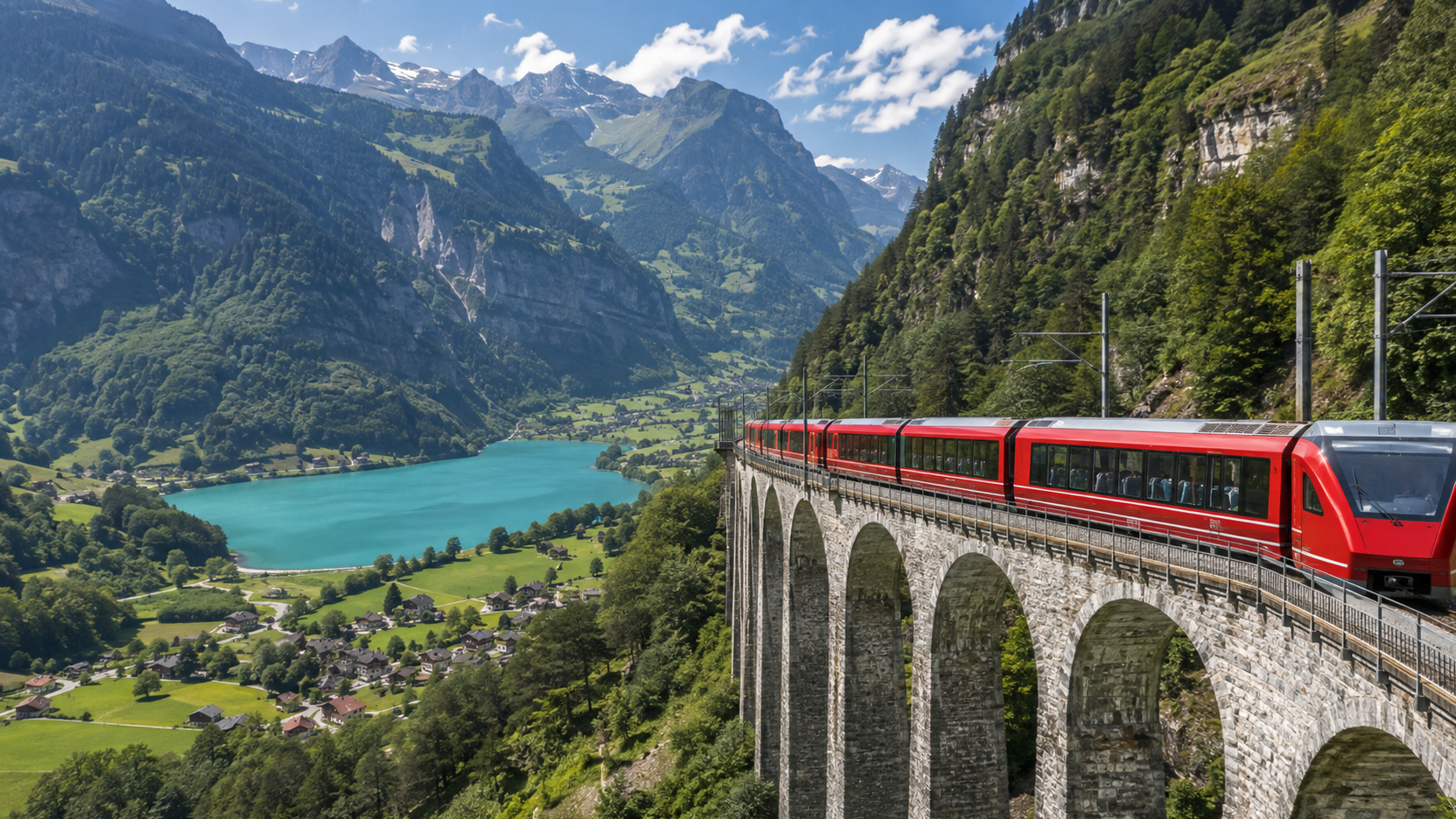
The Swiss Travel Pass is usually worth it when you change bases often, take long scenic journeys and use boats, city transport or included museums. It is usually not the cheapest choice for a city break with one or two excursions. Compare it with regular tickets, Saver Day Passes and the CHF 150 Swiss Half Fare Card before buying.
Swiss Travel Pass prices for 2026
| Consecutive days | Adult 2nd class | Youth 2nd class | Adult cost per day |
|---|---|---|---|
| 3 days | CHF 254 | CHF 179 | CHF 84.67 |
| 4 days | CHF 309 | CHF 218 | CHF 77.25 |
| 6 days | CHF 399 | CHF 282 | CHF 66.50 |
| 8 days | CHF 439 | CHF 311 | CHF 54.88 |
| 15 days | CHF 499 | CHF 356 | CHF 33.27 |
The per-day price falls sharply on the 8- and 15-day versions. That is why the pass can be weak for a light three-day visit but compelling for a longer moving itinerary.
Prices checked on Switzerland Tourism’s official Swiss Travel Pass price page. Youth prices apply to travelers under 25; SBB states the youth reduction is 30%.
Which Swiss rail option is cheapest?
Enter the full-price total shown by SBB for transport covered by the pass, then add only the museums you will actually visit.
Conservative estimate: mountain railways that are only discounted, reservation fees and temporary promotions are excluded.
Swiss Travel Pass
CHF 309About CHF 36 less than the next-cheapest option in this example.
- Swiss Travel Pass
- CHF 309
- Half Fare Card + tickets
- CHF 345
- Regular tickets + museums
- CHF 365
The simplest break-even rule
Add the full-price cost of every covered train, bus and boat journey in the SBB timetable. Then add the admission price of only the included museums you genuinely plan to visit. If that total is below the pass price, regular tickets are cheaper.
The comparison with the Swiss Half Fare Card is different. The tourist card costs CHF 150 for one month and reduces most eligible transport by up to 50%. Ignoring special offers and partially covered mountain journeys, the rough break-even formula is:
Full-price covered travel needed ≈ 2 × (Swiss Travel Pass price − CHF 150). Add museum value separately because museums are included with the Travel Pass, not the Half Fare Card.
| Travel Pass | Pass price | Full-fare travel where it starts beating Half Fare |
|---|---|---|
| 3 days | CHF 254 | About CHF 208 |
| 4 days | CHF 309 | About CHF 318 |
| 6 days | CHF 399 | About CHF 498 |
| 8 days | CHF 439 | About CHF 578 |
| 15 days | CHF 499 | About CHF 698 |
The CHF 150 price and one-month validity come from SBB’s official Swiss Half Fare Card page.
Break-even example 1: a four-day city break
Plan: stay in Zurich, use local transport, make one return day trip to Lucerne and visit one museum.
| Option | Illustrative total | Verdict |
|---|---|---|
| Regular tickets + museum | CHF 235 | Cheapest |
| Half Fare Card + reduced tickets + museum | CHF 280 | Card cost is hard to recover |
| 4-day Swiss Travel Pass | CHF 309 | About CHF 74 more |
Result: the Swiss Travel Pass is not worth it. A traveler based in one city normally cannot generate enough covered transport value. Check whether a local city card or advance Saver Day Pass improves the ticket option further.
Break-even example 2: a four-day scenic loop
Plan: Zurich to Lucerne, the scenic route to Interlaken, onward to Montreux and a final long-distance journey, plus one included museum. Assume the standard covered transport basket shown by SBB totals about CHF 340.
| Option | Illustrative total | Verdict |
|---|---|---|
| 4-day Swiss Travel Pass | CHF 309 | Cheapest and flexible |
| Half Fare Card + reduced tickets + museum | CHF 345 | About CHF 36 more |
| Regular tickets + museum | CHF 365 | About CHF 56 more |
Result: the Travel Pass wins because every day contains meaningful covered travel and the museum adds real value. Premium panoramic train reservations or supplements still cost extra.
Break-even example 3: an eight-day moving trip
Plan: change bases most days, combine intercity trains, scenic routes, boats and urban transport, and visit one included museum. Assume standard covered transport would total CHF 650.
| Option | Illustrative total | Verdict |
|---|---|---|
| 8-day Swiss Travel Pass | CHF 439 | Cheapest |
| Half Fare Card + reduced tickets + museum | CHF 500 | About CHF 61 more |
| Regular tickets + museum | CHF 675 | About CHF 236 more |
Result: the pass is worth it. At CHF 54.88 per day, the eight-day version needs much less daily travel to break even and removes the need to buy a ticket for every covered journey.
Example totals are planning illustrations, not quoted fares. Enter your dates and exact routes in SBB before purchasing; timetable fares, Supersaver availability and mountain coverage can change the result.
What the Swiss Travel Pass includes
- Unlimited travel on the covered national train, bus and boat network.
- Local public transport in more than 90 Swiss towns and cities.
- Premium panoramic trains, excluding compulsory reservations or supplements.
- Free admission to more than 500 museums.
- Rigi, Stanserhorn and Stoos mountain excursions.
- Up to 50% off many other mountain railways and cable cars.
- A complimentary Swiss Family Card for eligible children traveling with a parent.
Coverage and benefits checked on the official SBB Swiss Travel Pass overview and tourist-pass help page.
What is not fully included
- Seat reservations and supplements on premium panoramic trains.
- Many high mountain railways, gondolas and cable cars; most are discounted rather than free.
- The complete journey to Jungfraujoch.
- Accommodation, meals and luggage reservation services.
- Transport outside the official validity map.
Never count a famous mountain excursion as “free” without checking the current validity map. This is the most common reason an optimistic pass calculation becomes wrong.
Swiss Travel Pass vs Saver Day Pass
SBB Saver Day Passes start at CHF 52 in second class without a Half Fare Card, or CHF 29 with one. They can be excellent for travelers who know their dates and book early, but the cheapest quotas are limited.
| Number of days | Travel Pass | Saver Day Passes from CHF 52 | Difference |
|---|---|---|---|
| 3 | CHF 254 | From CHF 156 | Travel Pass costs CHF 98 more |
| 4 | CHF 309 | From CHF 208 | Travel Pass costs CHF 101 more |
| 6 | CHF 399 | From CHF 312 | Travel Pass costs CHF 87 more |
| 8 | CHF 439 | From CHF 416 | Travel Pass costs CHF 23 more |
Those are minimums, not guaranteed prices. Saver Day Passes also do not copy every Travel Pass benefit. Compare live availability, museum value and mountain discounts—not just the headline starting fare.
Minimum prices and quota rules checked on SBB’s official Saver Day Pass page. Supersaver point-to-point tickets can also offer up to 50% off but are tied to the selected connection.
When the Swiss Travel Pass is worth it
- You change hotels or regions almost every travel day.
- Your itinerary includes several long intercity or scenic routes.
- You will use lake boats and urban transport as part of the trip.
- You genuinely plan to visit included museums.
- You value the freedom to change covered trains without buying new tickets.
- You travel with eligible children and can use the Swiss Family Card.
When it is probably not worth it
- You stay in one city and take only one or two day trips.
- You can buy low-priced Saver Day Passes early.
- Your biggest expenses are mountain excursions that are only partly discounted.
- You do not plan to visit museums or use boats and urban transport.
- Your full-price covered travel total is clearly below the pass price.
How to calculate your own trip correctly
- List each intercity train, regional train, bus and boat journey by date.
- Check the standard full fare in the official SBB timetable.
- Check Saver Day Pass and Supersaver availability separately.
- Mark each mountain journey as included, discounted or not covered.
- Add only museums you would visit even without the pass.
- Compare the total with the Travel Pass and CHF 150 Half Fare Card.
- Give convenience a value only after identifying the cheapest option.
Point-to-point tickets are valid for the chosen route and day, while Supersaver tickets are connection-specific and limited. SBB explains the distinction on its official Point-to-Point Ticket and Supersaver Ticket pages.
Important practical rules
- The Swiss Travel Pass is for people whose permanent residence is outside Switzerland and Liechtenstein.
- It is valid only with the original passport or official ID used for travel.
- The consecutive pass is sold for 3, 4, 6, 8 or 15 days; the Flex version uses selected days within one month.
- SBB says the pass can be purchased up to 11 months in advance.
- Most regular Swiss trains do not need a reservation, but premium panoramic services may.
The Swiss Travel Pass is the tourist product discussed here. SwissPass is the separate card and account system used for Swiss public-transport products.
Frequently asked questions
Is the Swiss Travel Pass worth it?
Usually yes for a fast-moving, transport-heavy itinerary; usually no for a city-based trip with limited excursions. Calculate your exact SBB basket first.
How much is the Swiss Travel Pass in 2026?
Adult second-class prices are CHF 254 for 3 days, CHF 309 for 4 days, CHF 399 for 6 days, CHF 439 for 8 days and CHF 499 for 15 consecutive days.
What is included?
Covered trains, buses, boats, urban transport in over 90 towns, more than 500 museums, and selected mountain excursions. Panoramic reservations and many mountain trips cost extra.
Is Jungfraujoch included?
No. The complete journey is not included. Check the current discounted connecting fare and validity map before travel.
Is the Half Fare Card better?
It is often better for occasional travel or mountain-focused trips. The Travel Pass becomes stronger when your covered transport total is high and you use its included benefits.
Do I need reservations?
Not on most regular Swiss trains. Premium panoramic trains may require a paid reservation or supplement.
The practical verdict
Do not buy the Swiss Travel Pass because Switzerland “looks expensive.” Buy it when your own covered transport and museum basket reaches the break-even point. For a light city trip, regular or saver tickets normally win. For a four-day scenic loop or an eight-day moving itinerary, the pass can save money while giving you much more flexibility.
Paris to Rome by train
Compare the best daytime connection, overnight alternatives and when flying wins.
Read the route guide →Prices and benefits checked August 17, 2026. Fares, validity maps, mountain discounts, promotions and reservation rules can change. Verify every route with SBB and the relevant mountain operator before purchase. Europe Rail Trip is independent and does not sell Swiss passes.