Europe Train Travel Guide: Routes, Tickets, Passes & Planning
A practical system for turning a list of European cities into a bookable rail trip—with fewer rushed connections, surprise fees and wrong-station mistakes.
Plan Europe by train in this order: choose a compact route, check the real train times, compare individual tickets with a pass, confirm stations and reservation rules, then add safe transfer buffers. Do not buy a pass or lock hotels before proving that the route works.
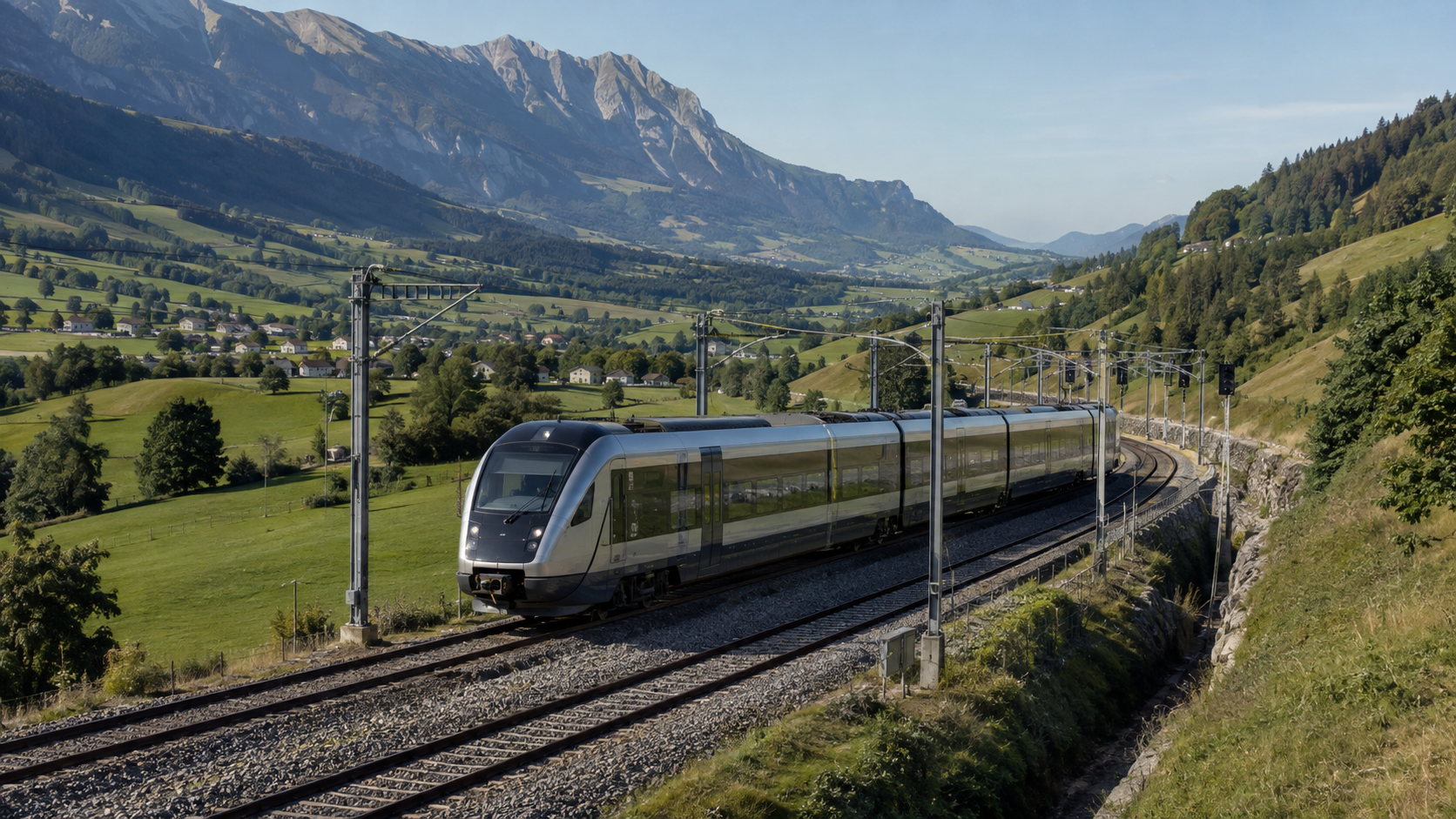
1. Build a route that works by rail
The easiest first trip is usually a chain of nearby cities rather than a star-shaped itinerary that returns to the same base. London–Paris–Brussels, Madrid–Barcelona and Rome–Florence are examples of corridors where the train joins city centres directly.
Start with the places you care about, then remove unnecessary backtracking. Treat a four-hour train as more than four hours: you still need to leave the hotel, reach the correct station, board and get to the next accommodation. Two-night stops can disappear quickly when every other day becomes a transfer day.
| Route type | Best approach | Main risk |
|---|---|---|
| Direct high-speed | Compare departure time, fare rules and luggage | Cheap tickets may be inflexible |
| One protected connection | Prefer one through-ticket where available | A short transfer can fail after a small delay |
| Cross-city transfer | Add local transport and a generous buffer | The arrival and departure stations differ |
| Overnight journey | Compare a sleeper with a day train plus hotel | Private rooms can sell out early |
2. Check the anchor journeys first
Prove the longest, international or least frequent legs before optimizing the easy regional sections. Start with our detailed guides to the London to Paris train, London to Brussels by train, London to Amsterdam train, Madrid to Barcelona train, Rome to Florence train and Paris to Rome by train.
Use an operator or national railway planner for the final timetable and price. Comparison sites are useful for discovery, but the operating company controls disruptions, fare conditions and many after-sales changes. If you use an intermediary, understand what Rail Europe does and where extra fees can appear.
3. Pass or point-to-point tickets?
A rail pass buys travel-day flexibility; it does not automatically buy the cheapest journey or a reserved seat. Point-to-point tickets can win when the itinerary is fixed and advance fares are available. Our guide to whether a Eurail Pass is worth it gives you a complete break-even method.
- List every long-distance travel day.
- Price the actual point-to-point tickets you would buy.
- Add seat reservations, booking fees and local tickets.
- Compare that total with the pass plus required reservations.
- Put a value on flexibility instead of assuming it is free.
Country-specific products need their own calculation. For Switzerland, use our Swiss Travel Pass break-even examples and compare them with the routes you will really take.
4. Understand reservations and ticket protection
Some European trains are open-seating regional services. Many high-speed, international and overnight trains require or strongly benefit from reservations. A rail pass does not remove that requirement, and popular departures can run out of passholder reservation space.
A single through-ticket can also matter during disruption. If a delayed first train causes a missed protected connection, the support available is usually stronger than with two unrelated fixed tickets. One checkout or one booking reference does not always prove through-ticket protection—read the wording.
5. Treat stations as part of the journey
Large cities often have several major stations. Paris Gare du Nord and Gare de Lyon are not two names for the same place; moving between them is a journey across Paris. Follow our Gare du Nord to Gare de Lyon transfer guide and test your own timetable in the connection checker.
Before booking, write the full departure and arrival station beside every train. Check how long it takes from the hotel, whether border or security controls happen before boarding, and whether the final local connection still operates after a late arrival.
6. Pack for platforms, stairs and luggage racks
European rail is easier when you can move your own bag. You may need to lift it over a train gap, carry it upstairs or fit it into a rack that is not beside your seat. Our practical guide to luggage size for a two-week Europe train trip explains why one manageable suitcase and a compact day bag usually beat the maximum allowance.
Low-cost high-speed operators can have stricter included dimensions than full-service trains. Always compare the final fare after adding the luggage, seat and flexibility you need.
7. A reliable booking sequence
- Lock the route shape. Decide the city order and number of nights.
- Verify anchor trains. Check the hardest or least frequent legs.
- Compare ticket strategies. Price individual tickets against passes.
- Check every station. Include airport links and cross-city transfers.
- Choose protection. Prefer through-tickets when a missed connection would be costly.
- Book accommodation around confirmed travel. Avoid non-refundable timing conflicts.
- Save offline copies. Keep tickets, reservations and operator contacts available without data.
Frequently asked questions
What is the best way to plan train travel in Europe?
Build a compact route, verify real train times, compare tickets with passes, then add station and transfer buffers before booking.
Is a Eurail pass always cheaper?
No. It can provide valuable flexibility, but advance tickets may cost less on a fixed route and reservations can still be extra.
How early should I book?
Book popular international, sleeper and high-speed trains after sales open when your dates are fixed. Exact booking windows vary by operator.
How much connection time do I need?
It depends on station size, ticket protection, border checks and whether you change stations. Use a larger buffer for unfamiliar or cross-city transfers.
Your next step
Choose one anchor route and verify it before planning the whole continent. If your itinerary already contains a connection, run the actual times through our Europe train connection checker. A workable route is more valuable than a perfect spreadsheet built on impossible transfers.
London to Paris by train
Direct Eurostar times, fares, check-in, luggage and booking advice.
Plan London to Paris →Planning principles checked August 22, 2026. Timetables, fares, reservation rules and ticket conditions change. Confirm live details with the operator before purchase and travel.