London to Dublin by Train and Ferry: Complete Route Guide
SailRail turns the journey into one connected adventure: London to the Welsh coast by train, across the Irish Sea by ferry, then into central Dublin.
Travel from London Euston to Holyhead by train, walk into the adjoining ferry terminal, sail to Dublin Port, then take a paid bus or taxi into the city. A well-timed journey commonly takes about 8–9 hours to Dublin Port. Buy a through SailRail ticket rather than separate train and ferry tickets when the itinerary works for you.
The route at a glance
| Stage 1 | London Euston → Holyhead by mainline train |
|---|---|
| Stage 2 | Holyhead → Dublin Port by Stena Line or Irish Ferries |
| Stage 3 | Dublin Port → city centre by paid bus or taxi |
| Typical total | About 8–9 hours to Dublin Port; schedules vary |
| Through ticket | SailRail / Rail & Sail |
| Seat | Ferry reservation required; train reservation depends on ticket |
| Main hidden extra | London local transport and Dublin Port transfer |
What exactly is a SailRail ticket?
SailRail combines the mainline railway journey in Great Britain with a reserved ferry crossing to Ireland. Transport for Wales sells the product for journeys from Great Britain to destinations in the Republic of Ireland and Northern Ireland, using Stena Line or Irish Ferries.
For London to Dublin, the usual route is via Holyhead in North Wales. The through ticket reduces the number of separate purchases, and the itinerary is designed around a specific sailing. It is still important to understand the limits: Irish Ferries states that train and ferry services are not treated as guaranteed connections by the train operators, so you should plan for disruption rather than assume every late train forces the ship to wait.
A SailRail ticket generally does not cover the London Underground, buses across London, Dublin's Luas system or the normal transfer from Dublin Port into the city. Budget for those separately.
Product details checked with Transport for Wales' official SailRail guide and SailRail FAQ.
Step 1: London Euston to Holyhead
The railway portion starts at London Euston. Some trains run through to Holyhead, while other itineraries require a change—commonly at Crewe or Chester. Use the exact itinerary attached to your ticket and recheck it shortly before travel because engineering work can alter the route.
Direct trains are the easiest option with luggage, but the best ferry connection may use a change. Do not reject a one-change itinerary automatically: a sensible transfer in Crewe or Chester can still be straightforward. Avoid constructing a very tight connection yourself with separate tickets.
Arrive at Euston early enough to find the platform and coach. Unlike Eurostar, there is no international border or airport-style check-in at the London station. The time-sensitive check-in happens at Holyhead before the ferry.
Step 2: changing from train to ferry at Holyhead
Holyhead railway station and ferry terminal form one transport complex, which is the key reason this route works. Follow the ferry and foot-passenger signs after leaving the train. You do not need a taxi across town.
Allow the transfer time shown in the booked itinerary and do not stop for a long meal before checking in. Stena Line says check-in for foot passengers on Holyhead–Dublin closes 40 minutes before departure. If you miss that deadline, Stena says it will accommodate you on the next available sailing, but that can mean a long wait and should not be treated as a planned fallback.
Keep your SailRail ticket, ferry reservation and identity document accessible. Holyhead's terminal is currently listed as closed between 03:00 and 05:45, so an overnight plan needs particularly careful checking.
Check-in rule: Stena Line's official port check-in FAQ.
Step 3: the ferry across the Irish Sea
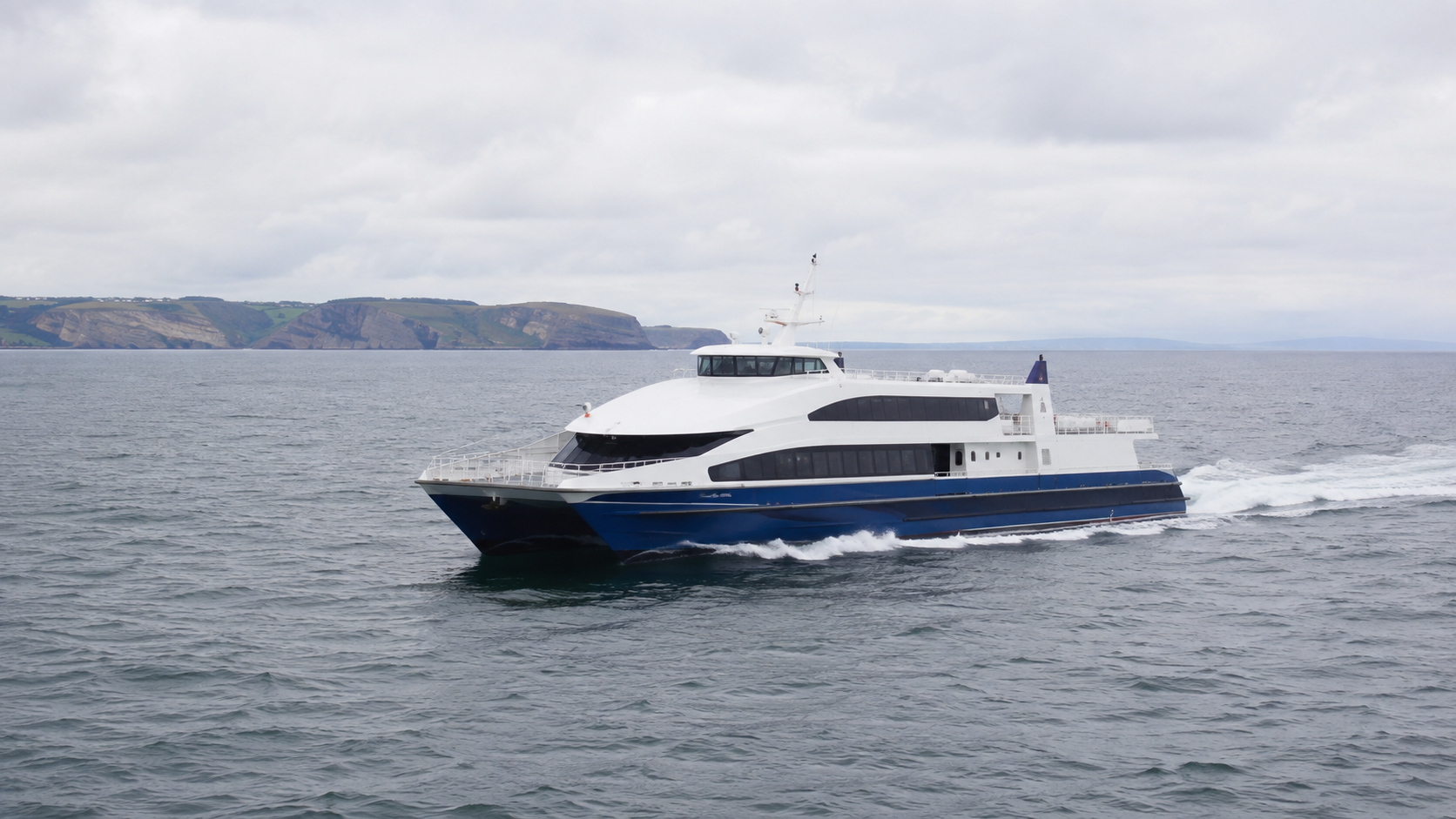
Stena Line and Irish Ferries both serve the Holyhead–Dublin route. The crossing is not simply transport: passenger ferries have indoor seating, toilets and food and drink available, with optional lounges or cabins on some sailings. Exact vessels and facilities can change.
A conventional crossing is usually a little over three hours, but the scheduled duration depends on the vessel and conditions. Wind and operational disruption can delay or cancel sailings, so check the ferry operator's live status before leaving London.
Onboard, keep a small bag with medicine, documents, chargers and anything you need during the crossing. Irish Ferries says larger luggage may be checked into its handling facility; each checked item must not exceed 22 kg, and you cannot access it while at sea.
Step 4: Dublin Port to the city centre
Dublin Port is about two miles from central Dublin, but it is an industrial port rather than a city-centre railway station. Do not expect to walk casually from the ship to Temple Bar with a suitcase.
Dublin Port lists a paid express transfer operating seven days a week, as well as public Dublin Bus route 53 between the port and Talbot Street. Services and pickup points can change with port works, so check the port and ferry operator information on the day. A taxi is the simplest alternative, especially for two or more people or a late arrival.
Current access information: Irish Ferries' official Dublin Port directions.
How much does London to Dublin SailRail cost?
Stena Line currently lists London–Dublin Advance fares from £53.40 one way, subject to availability. When Advance inventory is unavailable, a supplement may apply. Irish Ferries advertises SailRail from Britain from £46, but that is a network-wide starting price and should not be read as a guaranteed London fare.
The through fare can be excellent value because it covers a long-distance train and ferry. Compare the complete cost, including your journey to Euston and the Dublin Port transfer. A cheap flight can look lower until airport transport, baggage and seat fees are added.
Transport for Wales says SailRail tickets can be sold up to eight weeks in advance. Advance tickets have limited availability and are normally sold until the evening before travel; Standby tickets can be available later through booking offices, subject to ferry space.
Live starting fare and conditions: Stena Line's Rail & Sail to Ireland and Irish Ferries' SailRail offer.
How to book the journey correctly
- Search from London Euston to the correct Dublin SailRail destination in the Transport for Wales journey planner.
- Compare the full itinerary, not only the departure time.
- Confirm which ferry company and sailing are reserved.
- Check the ticket delivery method before paying. Some SailRail channels still have collection or postal restrictions.
- Save the itinerary, booking references and ferry status links offline.
- Recheck train engineering work and the ferry status the day before and again on departure day.
If the online journey planner does not offer a sensible itinerary, Transport for Wales also sells by phone and at station ticket offices. Do not separately buy a train to Holyhead before confirming that foot-passenger space exists on the ferry you need.
Passport, visa and ID rules
The UK and Ireland are part of the Common Travel Area, but that does not mean every traveler can travel without documents. British citizens are not legally required to show a passport to enter Ireland, yet ferry operators may ask for acceptable photo ID. Carrying a valid passport is the simplest option.
If you are not British or Irish, travel with a valid passport and verify whether you need an Irish visa or other permission. Your UK immigration permission does not automatically grant entry to Ireland. Likewise, travelers returning to Britain must satisfy current UK rules, including ETA requirements where applicable.
Immigration rules are personal and can change. Verify them with Irish Immigration, GOV.UK and your ferry operator rather than relying on another passenger's experience.
Official context: Ireland entry requirements and UK ETA exemptions.
Luggage: generous, but you carry it
Stena describes Rail & Sail as having no luggage restrictions, while Irish Ferries lets you bring what you can comfortably carry and applies its own checked-bag process. The practical limit is your ability to move through Euston, change trains if required, reach ferry check-in and transfer again in Dublin.
One wheeled suitcase and a small day bag is far easier than several loose items. Irish Ferries does not accept loose boxes as hand luggage. Label every bag and keep valuables, medicine and documents with you.
What happens if the train or ferry is delayed?
Check with staff before making your own alternative plan. Stena notes that sailings may sometimes wait for delayed rail passengers, at the captain's discretion, but this is not guaranteed. Irish Ferries explicitly warns that RailSail services are not considered protected connecting services by the train companies.
Keep screenshots of delay information and ask the operator handling the disrupted stage what it will provide. Travel insurance can be useful for missed accommodation or other costs that fall outside the ticket conditions.
Frequently asked questions
Is there a direct train from London to Dublin?
No. The Irish Sea requires a ferry. SailRail combines the train to Holyhead and the ferry to Dublin on one ticket.
How long does the full trip take?
A practical daytime itinerary often takes around 8–9 hours from Euston to Dublin Port, plus the transfer into central Dublin. Use the live booked schedule.
Can I travel overnight?
Some combinations may involve late or early travel, but check terminal opening hours, ferry check-in and onward city transport carefully. Do not assume the terminal stays open all night.
Does SailRail include the Dublin city bus?
Usually no. The Dublin Port transfer is generally paid separately, as is local transport across London.
Can I take a bicycle?
It can be possible, but ferry space and train reservations have separate rules. Confirm both parts before buying; Stena currently lists a bicycle charge on its Rail & Sail terms.
Is SailRail better than flying?
It is slower but can be more relaxed, scenic and luggage-friendly. It is especially attractive for travelers avoiding flights or who value a city-to-port journey over airport procedures.
The practical verdict
London to Dublin by train and ferry is a full travel day, but it is also one of Europe's best no-fly journeys. Book the through itinerary early, protect the Holyhead check-in time, keep essential items in a small bag and arrange the Dublin Port transfer before arrival. The route rewards planning much more than speed.
London to Brussels by train
Direct Eurostar time, stations, passport checks, luggage and booking advice.
Read the route guide →Information checked August 15, 2026. Train times, ferry schedules, fares, terminal access and immigration rules can change. Verify the live itinerary with the operators and official authorities before travel.