Europe Packing List: What to Pack for Any Trip
A flexible master list for city breaks, rail itineraries and mixed train-and-flight trips—without packing for every possible emergency.
Pack travel documents, a small capsule wardrobe, comfortable shoes, essential toiletries, a European plug adapter, medication and transport-specific items. Keep the main bag light enough to lift onto a train and adjust layers to the exact month and countries.
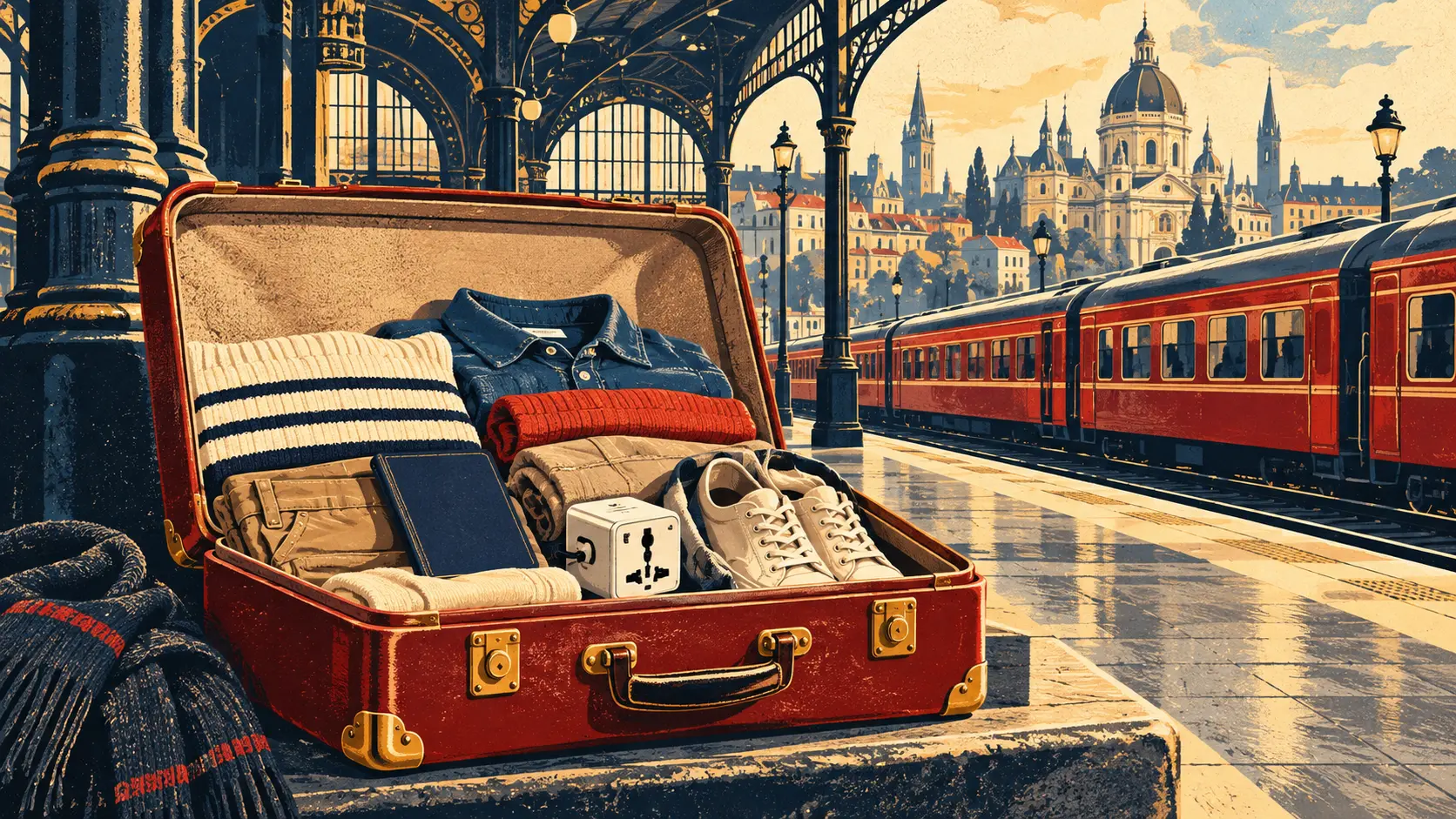
A useful Europe packing list starts with the trip, not with a giant universal checklist. Seven nights in Portugal require different layers from seven nights in Switzerland, and a direct flight with checked luggage creates different constraints from a multi-country rail journey.
Build around items you will use repeatedly. Neutral layers, one dependable walking shoe and a compact day bag solve more problems than extra outfits. Leave spare capacity for food, laundry and purchases instead of filling every litre before departure.
Europe packing list: the essentials
Keep documents and valuables together but not all in one wallet. Download tickets, insurance details and accommodation addresses for offline use. Carry the identification required for every border and operator, even when routine checks are uncommon.
- Passport or national ID and required visas
- Travel insurance and emergency contacts
- Payment card, backup card and some cash
- Phone, charging cable and European plug adapter
- Prescription medicine in original packaging
- Comfortable walking shoes
- Weatherproof outer layer
- Small secure day bag
- Reusable water bottle
Build a repeatable capsule wardrobe
Choose tops and bottoms that combine with one another. For a week, five to seven tops, two or three bottoms, one smarter outfit and one outer layer are usually enough. For longer travel, plan laundry rather than multiplying every quantity.
Wear the bulkiest footwear and coat on travel days. Pack fabrics that dry overnight and avoid a second heavy shoe unless the trip genuinely requires formal, hiking or beach footwear.
- 5–7 mixable tops for a one-week trip
- 2–3 bottoms
- Underwear and socks for the interval between washes
- Sleepwear
- One smarter outfit
- One mid-layer
- One weatherproof shell
Pack for European trains
European railways rarely use airline-style checked baggage, but that does not mean unlimited luggage is practical. You may need to lift the case into a carriage, move it through narrow aisles, use stairs and keep valuables at your seat.
A medium wheeled case or travel backpack plus a small day bag is easier than multiple loose items. Keep food, water, medicine, power bank and the next ticket accessible without opening the main case.
- Luggage you can lift independently
- Offline tickets and seat reservations
- Small valuables bag
- Snack and water for longer routes
- Luggage label
- Light layer accessible at your seat
Pack for flights and low-cost airlines
The fare name does not tell you the full allowance. Open the booking and check the dimensions, weight and number of bags included. Ryanair, easyJet and Wizz Air sell different bag products, and add-ons can vary by route and ticket.
Measure the packed bag, not the empty shell. Keep medication, documents, valuables and one essential change of clothes in the cabin when checking a suitcase.
- Bag measured against the booked allowance
- Liquids prepared for security
- Boarding pass available offline
- Medication and valuables in the cabin
- Empty bottle to refill after security
What not to pack
Avoid a different outfit for every day, full-size toiletries available at the destination and equipment kept only for a remote possibility. Too much luggage slows station changes and can turn short walks into taxi journeys.
Do not pack restricted or dangerous items without checking transport rules. Batteries, aerosols, tools and sporting equipment can have special conditions, especially on flights.
Related Europe packing and train guides
Europe carry-on packing list · Europe train trip packing list · Best luggage size for Europe trains · Europe train travel guide
Frequently asked questions
How many outfits should I pack for Europe?
For most trips, build five to seven mixable daytime outfits and plan laundry for journeys longer than a week.
Do I need a European plug adapter?
Usually yes if your plug type differs. Check the destination countries and ensure high-power devices support the local voltage.
Is a suitcase or backpack better for Europe?
Either works if you can lift it. Wheels suit smooth stations and hotels; a backpack can be easier on stairs and uneven streets.
Should I carry cash in Europe?
Cards are widely accepted, but a small amount of local currency and a backup payment method are sensible.
Europe Packing Planner
Adjust quantities for the trip length, weather, transport and luggage, then print or save the result as a PDF.
Generate my checklist →Information checked October 2, 2026. Airline baggage products, security rules, entry requirements and weather can change. Verify the rules attached to your booking and destination before departure.