Where to Go from London by Train: UK & Europe Ideas
London has direct rails to university cities, the coast, northern England, Scotland and continental Europe. The best choice depends less on distance than on how much usable time remains after the journey.
For an easy day trip, choose Oxford, Brighton or Bath. For a longer UK break, take a direct train to York or Edinburgh. For Europe without flying, Eurostar runs direct from London St Pancras to Lille, Brussels, Paris and Amsterdam. Treat operator headline times as the fastest journey, then check your exact date.
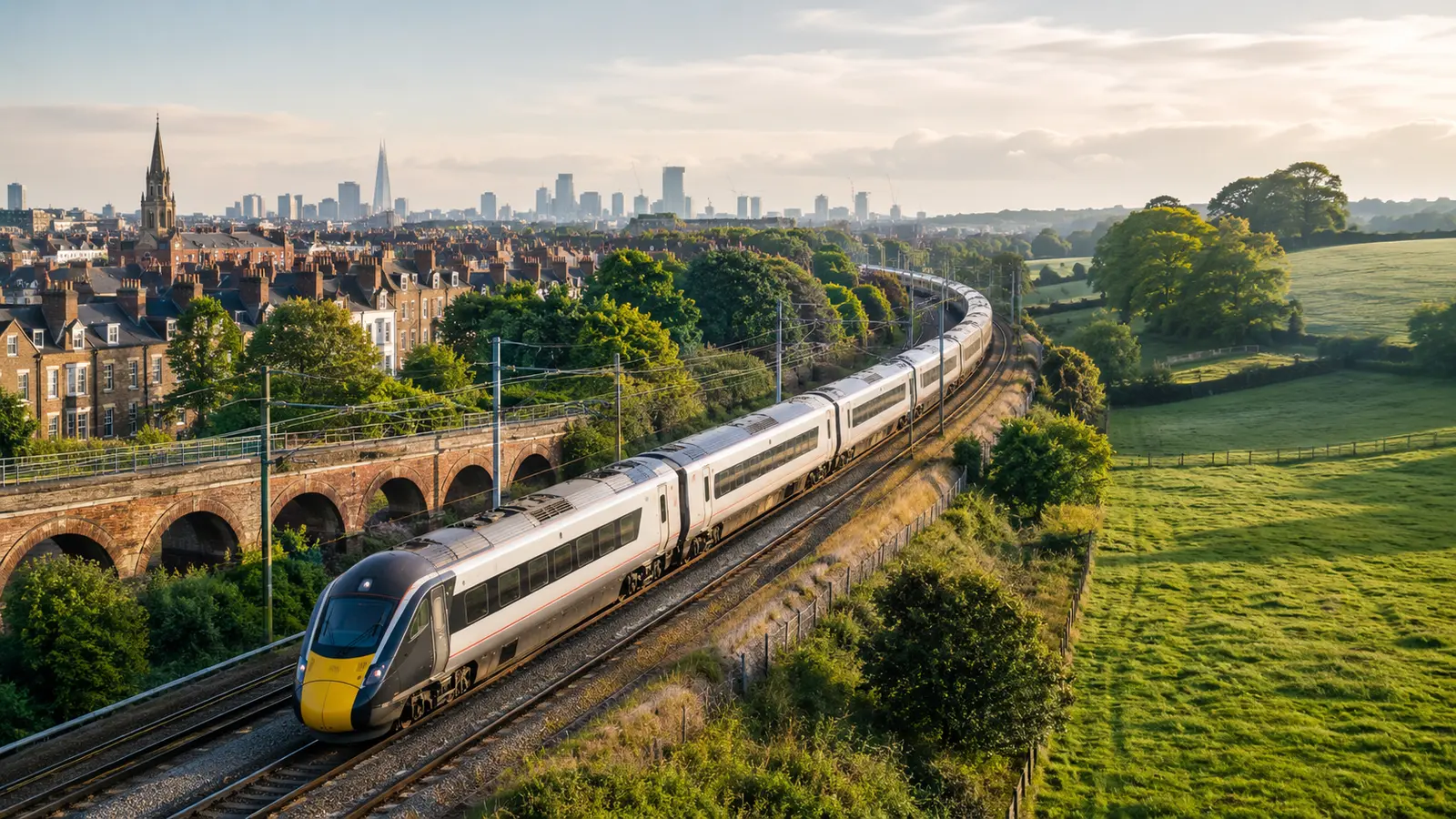
Best places to go by train from London
| Destination | Fastest or typical direct time | London station | Best trip length |
|---|---|---|---|
| Oxford | From 52 min | Paddington | Day trip |
| Brighton | About 1h–1h10 | London Bridge or Victoria | Day trip |
| Bath | From 1h19 | Paddington | Day trip or one night |
| York | About 2h02 | King’s Cross | Long day or one night |
| Edinburgh | About 4h08 | King’s Cross | Two nights+ |
| Lille | From 1h22 | St Pancras | Day trip or one night |
| Brussels | From 1h53 | St Pancras | One or two nights |
| Paris | About 2h16 | St Pancras | Two nights+ |
| Amsterdam | About 4h19 on the current route page | St Pancras | Two or three nights |
British journey times checked with the official GWR London–Oxford, GWR London–Bath, Thameslink London–Brighton and LNER London–York pages. European times checked with Eurostar’s official network. Timetables vary by date and engineering work.
1. Oxford: the easiest historic day trip
Oxford is the strongest first choice when you want maximum exploring time and minimal rail planning. GWR advertises a fastest London Paddington–Oxford journey of 52 minutes, with many trips around an hour. Oxford station is west of the centre, and the university streets are reachable on foot.
Choose Oxford for colleges, libraries, museums and a compact historic centre. An early departure and late-afternoon return are sufficient for a good day without turning the visit into a timetable exercise. Compare a flexible Off-Peak return with two Advance singles before paying.
2. Brighton: coast and independent city life
Brighton works when you want the sea rather than another museum-heavy city. Direct trains run from London Bridge, Victoria and other central stations. Thameslink lists around 1 hour 6 minutes from London Bridge, with the quickest trains close to one hour.
The station sits uphill from the seafront, so the centre is walkable. Brighton is easy as a spontaneous day trip, but check late-evening services and planned Brighton Main Line engineering work before committing to dinner or a show.
3. Bath: the best architecture-focused escape
Direct GWR trains leave Paddington for Bath Spa. The operator gives a fastest time of 1 hour 19 minutes and a typical journey around 1 hour 20 minutes. Bath Spa station is close to the Roman Baths, abbey and Georgian centre.
A day trip is realistic, but one night gives you the evening after tour groups leave. Bath is often more expensive than Oxford at popular times, so check Advance fares early and keep enough flexibility if your London plans are still moving.
4. York: a long day that can justify the train
LNER’s direct trains from King’s Cross average about 2 hours 2 minutes to York. That puts the medieval centre, Minster and city walls within reach without a flight or car. York station is beside the old city, so little time is lost on arrival.
A day trip works if you take an early train and prioritize two or three sights. One night is more comfortable and lets you avoid peak commuter departures. Book a seat on the specific LNER service when available, especially on busy weekends.
5. Edinburgh: a proper rail break, not a day trip
The East Coast Main Line is one of Britain’s most useful long-distance journeys. LNER gives a London–Edinburgh time around 4 hours 8 minutes and operates frequent direct trains. The arrival at Waverley is central, between the Old and New Towns.
Do not reduce Edinburgh to a same-day return. Two nights is the practical minimum. Daytime trains preserve the coastal views north of Newcastle; the Caledonian Sleeper can save a hotel night but is a different product and should be priced against a daytime ticket plus accommodation. Our London to Edinburgh guide compares the options.
6. Lille: the easiest international option
Eurostar advertises a fastest direct journey of 1 hour 22 minutes from St Pancras to Lille Europe. The railway time is shorter than Paris, and the station is close to the centre. Lille suits food, Flemish-influenced architecture and a compact weekend.
The headline time excludes pre-departure border and security checks in London. Arrive according to Eurostar’s guidance for your ticket and travel date. A day trip is possible, but a night gives useful protection against disruption and avoids building the whole visit around the last train.
7. Brussels: the best base for Belgium
Direct Eurostar trains reach Brussels-Midi in about 1 hour 53 minutes at the fastest. The arrival station is south of the historic centre, with frequent local trains and public transport. Brussels works for a weekend, while Bruges and Ghent become easy onward journeys on the Belgian network.
If Brussels is only a connection, allow a real buffer rather than relying on the advertised minimum. Separate tickets may leave you with weaker protection after a delay. Read our complete London to Brussels guide before booking an onward train.
8. Paris: the classic direct city break
Most direct Eurostar trains take about 2 hours 16 minutes from St Pancras to Gare du Nord. Paris deserves at least two nights: the train is quick, but London check-in and the fixed return departure reduce the value of a same-day visit.
Book by total trip value, not only the lowest fare. A slightly later outbound train can cost you half a day; an early return can turn a two-night booking into one useful day. Our London to Paris guide covers check-in, tickets, luggage and realistic station-to-station time.
9. Amsterdam: worthwhile for a longer weekend
Eurostar’s current London–Amsterdam route page gives direct journeys around 4 hours 19 minutes, while published headline times can vary as services and border arrangements change. The train arrives at Amsterdam Centraal, immediately beside the historic core and local transport.
Two or three nights justify the journey. Check that the exact result is direct in both directions; temporary border-control or engineering arrangements can create a Brussels connection on some dates. See our London to Amsterdam guide for the current route logic.
How to choose the right train trip
- Set the usable-time rule. For a day trip, avoid spending more than about two hours each way unless the destination is the main event.
- Start with your nearest London terminal. Crossing London can add 30–60 minutes and change the best destination.
- Compare the full day. Add station travel, check-in for Eurostar and the time needed to reach your accommodation.
- Check the return first. The last sensible train often determines the trip more than the first outbound service.
- Read the fare conditions. A cheap Advance or Eurostar ticket can be tied to one train.
How to save on tickets from London
For British journeys, National Rail says many Railcards reduce eligible fares by one third. Eligibility, minimum fares and time restrictions vary, so check the specific card rather than assuming every train is discounted. Groups of three to nine adults can also qualify for GroupSave on eligible Off-Peak tickets when they travel together.
For Eurostar, search nearby departures before changing dates or accommodation. Starting fares are limited; the cheapest train may leave too late to be useful. Book once your plan is firm and compare refund or exchange rules, not just the headline price.
Discount rules: official National Rail Railcards and GroupSave pages.
Frequently asked questions
Where can I go by train from London for a day trip?
Oxford, Brighton and Bath are the easiest options. York is possible as a long day, while Edinburgh and Amsterdam need overnight stays.
Which European cities can you reach directly by train from London?
Eurostar runs direct services to Lille, Brussels, Paris, Amsterdam and Rotterdam. Confirm the direct service for your exact date.
What is the easiest train trip from London?
Oxford is our easiest historic-city option, with direct trains from Paddington taking as little as 52 minutes.
Can you visit Paris by train from London in one day?
Yes, but it is a long day after check-in and border formalities. At least one night—and ideally two—is better.
How do I get cheaper train tickets from London?
Compare Advance and Off-Peak fares, check Railcard or GroupSave eligibility, and search nearby Eurostar departures before booking.
The practical verdict
Pick Oxford or Brighton for a simple day, Bath or York for a richer overnight option, and Edinburgh for a proper UK rail break. Choose Lille or Brussels for the easiest European weekend, Paris for the classic first trip and Amsterdam when you have at least two nights. Put the full sequence into the Europe Route Planner before buying fixed tickets.
Europe Train Travel Guide
Build the route, compare tickets and passes, then protect every connection.
Read the planning guide →Information last checked August 30, 2026. Journey times are representative fastest or typical direct times. Timetables, engineering works, fares, border procedures and direct services can change; confirm the exact date with the operator.