Amsterdam to Cologne by Train: Time, Tickets & Direct ICE
The direct ICE makes Cologne an easy extension to an Amsterdam trip. Book the correct central stations, understand the German fare types and decide whether an optional seat reservation is worth adding.
The fastest direct Amsterdam to Cologne train takes about 2 hours 37 minutes. ICE International runs from Amsterdam Centraal to Köln Hauptbahnhof without a change. Limited second-class fares currently start from €20 one way.
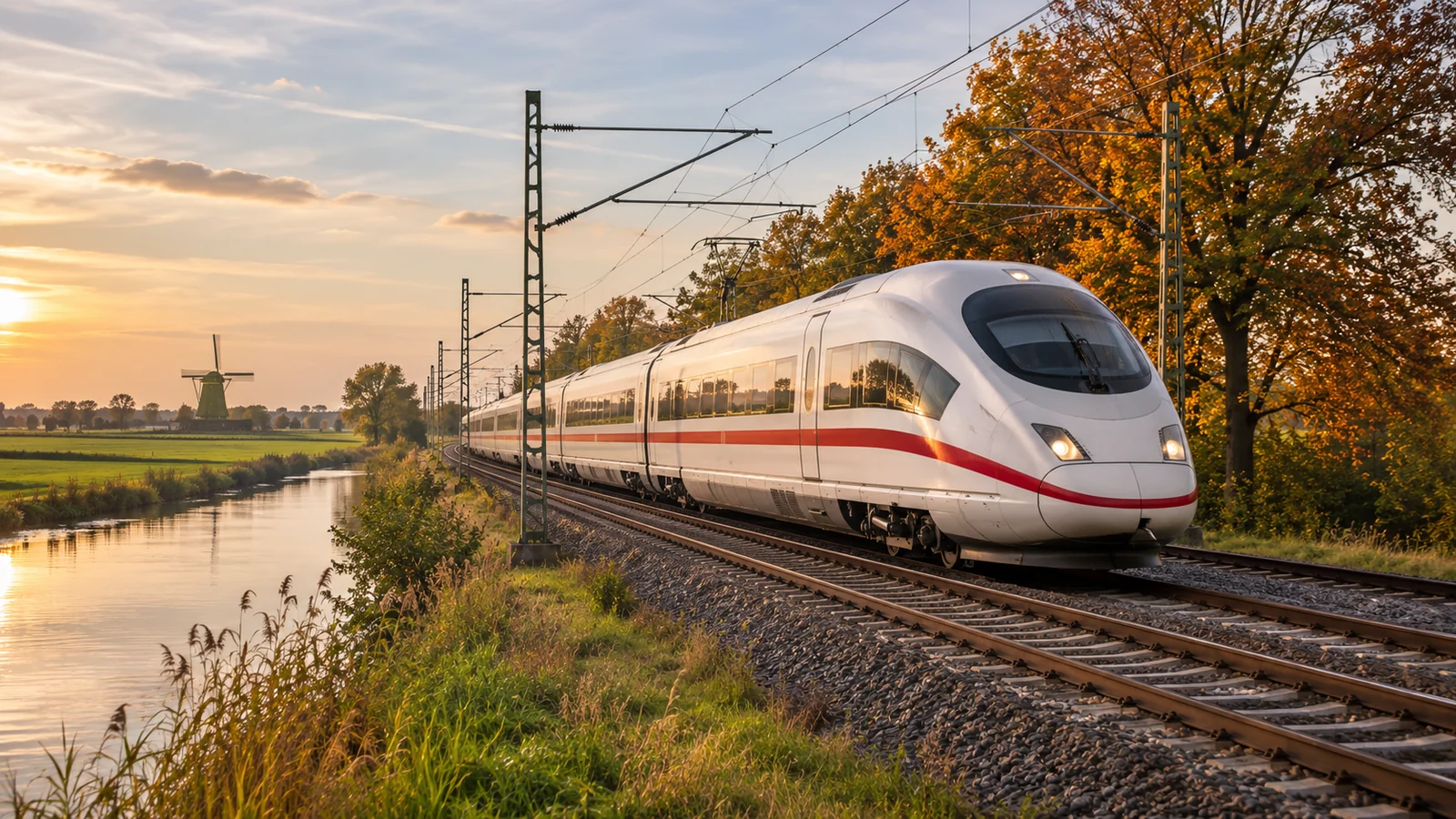
Amsterdam to Cologne by train at a glance
| Fastest direct journey | About 2h37 |
|---|---|
| Departure station | Amsterdam Centraal |
| Arrival station | Köln Hauptbahnhof |
| Direct train | ICE International |
| Changes | None on direct services |
| Seat reservation | Usually optional; recommended at busy times |
| Advertised entry fare | From €20 in second class |
How long is the train from Amsterdam to Cologne?
NS International lists the fastest direct journey at about 2 hours 37 minutes. ICE International leaves Amsterdam and normally serves Utrecht and Arnhem before crossing into Germany, then continues through the Rhine-Ruhr region to Köln Hbf. The train often continues beyond Cologne toward Frankfurt, so the departure board may show another city as its final destination.
Rail is competitive because both stations are central and there is no airport transfer or check-in. The exact duration can change during engineering work, especially on the busy German network. Confirm the live departure shortly before the trip and leave a sensible buffer before a separate onward booking.
Time, direct service, stations and entry fare checked on the official NS International Amsterdam–Cologne page.
Is there a direct Amsterdam to Cologne train?
Yes. Choose an ICE International showing zero changes and stay on the same train from Amsterdam Centraal to Köln Hbf. A connection in Düsseldorf or Duisburg is unnecessary when a direct departure fits your schedule.
Direct trains are easier with luggage and reduce missed-connection risk. Connecting journeys can still be useful during construction or when the direct train is expensive. If you book separate tickets, allow more time than the journey planner’s minimum transfer because a delay on the first ticket may not protect the second.
Which stations should you choose?
Amsterdam Centraal
Centraal is the main departure and the best default for most visitors. It connects with Dutch trains, metro, trams, buses and ferries. Some domestic engineering work can shift an international train to another Amsterdam station, so check the ticket rather than assuming every departure uses Centraal.
Köln Hauptbahnhof
Köln Hbf is the central Cologne station beside the cathedral, Old Town and Rhine. Do not choose Köln Messe/Deutz unless your accommodation or event is on that side of the river. The two stations are close, but arriving at Hbf is usually simplest for first-time visitors.
Facilities and onward connections are covered in Eurostar’s official Köln Hbf station guide.
How much are Amsterdam to Cologne tickets?
NS International currently lists second-class one-way fares from €20 with Super Sparpreis Europa, €25 with Sparpreis Europa and about €85 with Flexpreis Europa. First-class entry prices are higher. The lowest tickets are limited and tied to a particular train.
The fare name matters because flexibility changes sharply. Super Sparpreis is normally non-refundable and non-changeable. Sparpreis permits changes or cancellation under its current conditions and fee structure. Flexpreis costs more but offers the broadest flexibility and can include local German City-Ticket benefits where applicable.
| Fare | Best for | Main trade-off |
|---|---|---|
| Super Sparpreis Europa | Fixed plans and the lowest price | Train-specific; no changes or refunds |
| Sparpreis Europa | Lower fare with some cancellation options | Conditions and fees apply |
| Flexpreis Europa | Plans that may change | Much higher price |
Current ICE fare comparison checked on NS International’s official ICE guide. Always use the conditions displayed for the actual booking.
When should you book?
Book early when traveling on a Friday, Sunday, holiday, school break, Christmas-market weekend or major Cologne event. International ICE tickets can appear months in advance, but timetable releases vary around the annual December change. If your date is not yet on sale, do not assume the train has been cancelled.
Compare a window rather than one exact departure. A train an hour earlier can retain a cheaper fare bucket. When a flight or cruise feeds into the journey, a more flexible fare can be worth more than the initial saving.
Do you need a seat reservation?
ICE seat reservations are normally optional on this route, but they are useful for families, groups, weekends and busy holiday trains. Without a reservation, you may sit in an unreserved seat but could need to move when the person holding it boards later.
NS International has announced that reservations will be compulsory on international ICE journeys from 25 June through 5 September 2027. If your trip falls in that period, add the reservation when booking. A reservation by itself is not a ticket; rail-pass users need both a valid pass and any required reservation.
The current and scheduled reservation rules are published on NS International’s official ICE seat-reservation page.
How early should you arrive at Amsterdam Centraal?
There is no airline-style check-in. For a first trip, arriving 20 to 30 minutes early gives enough time to find the platform and correct coach. Match the train number on the ticket with the departure board, especially because the displayed final destination may be Frankfurt or another German city.
Keep the mobile ticket available offline. If you reserved a seat, locate the coach position on the platform display. Boarding the correct carriage is easier than moving through a busy train with luggage after departure.
Passport and German border controls
The Netherlands and Germany are in the Schengen area, but Germany currently conducts passport or identity checks on international long-distance trains. Carry a valid document accepted for your nationality and journey. Keep it accessible after boarding.
Most checks take place while the train moves and do not require a separate station process. They can still contribute to a delay. Stay on board and follow the instructions of the Federal Police.
Current practice checked on Deutsche Bahn’s official international border-controls page.
Luggage on Amsterdam–Cologne ICE
Deutsche Bahn does not require ordinary bags to be weighed or reserved. Hand luggage and one larger item that one person can carry are included. Standard rack dimensions are designed around roughly 70 × 50 × 30 cm, although the practical rule is that you must lift and store the bag safely yourself.
Use overhead racks for smaller bags and floor-level racks for suitcases. Keep doors, aisles and safety equipment clear, and place valuables at the seat. A medium suitcase plus compact backpack works well for a multi-city trip. See our European luggage-size guide for a practical packing setup.
Luggage guidance checked on Deutsche Bahn’s official train luggage page.
Can Cologne be a day trip from Amsterdam?
Yes, but it requires an early start. A 2h37 journey each way can leave six to eight useful hours for the cathedral, Rhine, Old Town and a museum. Book the return in advance and avoid the last practical train if a delay would strand you.
One night is more relaxed, particularly during Carnival or Christmas markets. Staying also creates an easy onward route to Brussels, Frankfurt or the Rhine Valley rather than returning to Amsterdam immediately.
How this route fits a wider Europe trip
Amsterdam–Cologne connects the Dutch rail network with Germany’s ICE spine. A practical sequence is Amsterdam → Cologne → Frankfurt → Munich, or Amsterdam → Cologne → Brussels → Paris. Keep the trip linear and avoid changing hotels for one rushed evening when a day trip works just as well.
Compare nearby routes with our Amsterdam to Brussels guide, Brussels to Cologne by train and Amsterdam to Berlin ICE guide.
Frequently asked questions
How long is Amsterdam to Cologne by train?
The fastest direct ICE journey takes about 2 hours 37 minutes.
Is the train direct?
Yes. ICE International runs directly from Amsterdam Centraal to Köln Hbf.
How much does the train cost?
Limited second-class fares currently start from €20 one way. Flexible tickets cost more.
Is a seat reservation required?
It is usually optional but recommended. It will be compulsory on international ICE trains from 25 June to 5 September 2027.
Which station is central in Cologne?
Köln Hauptbahnhof, shown as Köln Hbf, is beside the cathedral and Old Town.
Can I take luggage for free?
Yes. Ordinary luggage is included, provided you can carry and store it safely yourself.
The practical verdict
Book a direct ICE from Amsterdam Centraal to Köln Hbf, compare the three German fare types and add a seat reservation when the train is likely to be busy. At about 2h37, rail is the simplest city-centre option.
Continue on the same international corridor with the direct Amsterdam to Frankfurt ICE, or use Cologne as an overnight stop.
Brussels to Cologne by train
Compare the shorter direct Eurostar, €19 entry fares, boarding and border advice.
Read the Brussels–Cologne guide →Information checked November 7, 2026. Operators can change timetables, fares, border checks and reservation rules. Verify the live train and conditions before purchase.