How Long Is the Train From Amsterdam to Berlin?
The direct ICE turns this into a simple city-centre journey. The useful choice is between the fastest departure, the cheapest fare and the flexibility you may need later.
The direct ICE from Amsterdam Centraal to Berlin takes about 5 hours 51 minutes and currently runs five times a day. It serves Berlin Spandau, Berlin Hauptbahnhof and Berlin Südkreuz without a change. GoVolta offers a slower direct alternative on selected days, taking roughly 6.5 hours from Amsterdam.
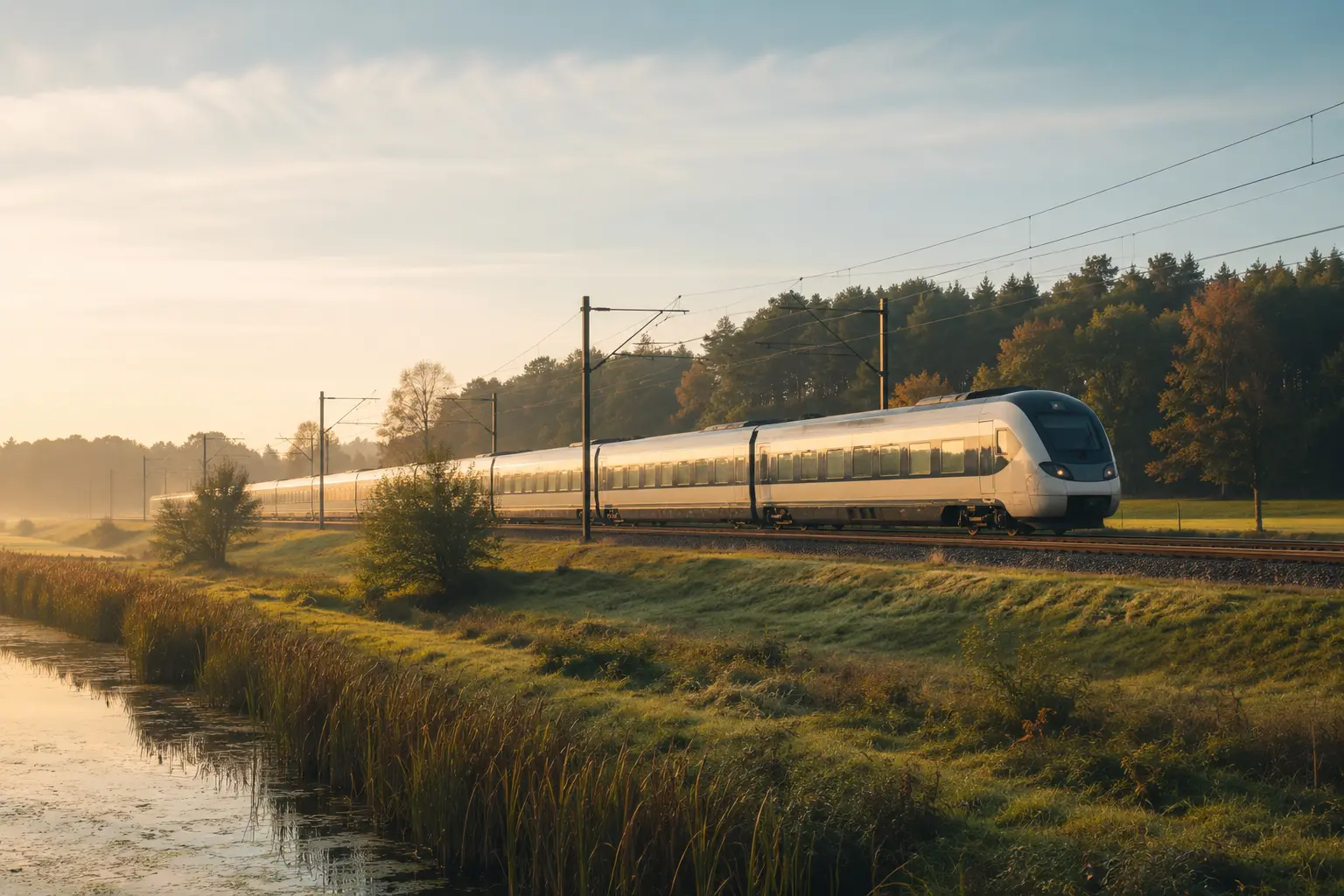
How long is the train from Amsterdam to Berlin?
NS International lists the direct ICE journey at 5 hours 51 minutes from Amsterdam Centraal to Berlin. Five direct departures currently run each day. The train continues through the Netherlands and northern Germany, stopping at cities including Amersfoort, Deventer, Hengelo, Osnabrück and Hannover before reaching Berlin.
Treat 5h51 as the published journey time rather than a guarantee. Engineering work, diversions and temporary speed restrictions can change the schedule. Check the exact train on your travel date, especially around weekends and timetable changes.
Current schedule checked on NS International’s official ICE to Berlin page and Berlin ticket guide.
Amsterdam to Berlin train facts
| Fastest direct journey | About 5h51 by ICE |
|---|---|
| Direct frequency | Five ICE trains daily |
| Departure | Amsterdam Centraal |
| Berlin stops | Spandau, Hauptbahnhof and Südkreuz |
| Change required | No on the direct ICE |
| Seat reservation | Usually optional; recommended on busy dates |
| Border control | No routine passport control, but carry valid ID |
The direct ICE is the best default
Since autumn 2025, the Amsterdam–Berlin route has used new ICE trains instead of the former Intercity Berlin stock. NS highlights power at the seat and the option to reserve. The main advantage is not only speed: you board in central Amsterdam and arrive at a choice of useful Berlin stations.
Choose the direct service unless a connecting journey is substantially cheaper or fits your schedule better. A transfer in Duisburg, Hannover or another German city introduces missed-connection risk without normally creating a meaningful time saving.
The direct train is also easier with luggage. You keep your bags with you, avoid airport liquid rules and do not need to move them between platforms. Use our Europe train luggage guide to choose a suitcase you can lift into overhead or end-of-car storage.
GoVolta: slower, direct and fare-led
GoVolta is a newer direct alternative. NS International lists services from Amsterdam on selected days, increasing to six times a week from July 2026. The Amsterdam–Berlin trip takes about 6.5 hours and the ticket includes a guaranteed seat.
This option can make sense when its departure time or total price beats the ICE. It is not a like-for-like substitute: the frequency is lower, the journey is slower and the Berlin stop can differ. Compare the complete arrival station and time before choosing only by headline fare.
Frequency, journey time and included seat checked on NS International’s official GoVolta guide.
Which Berlin station should you choose?
Berlin Hauptbahnhof
The central station is the best general-purpose choice. It connects with S-Bahn, U-Bahn, trams, regional trains and long-distance services. Choose it for central districts or an onward rail connection.
Berlin Spandau
Spandau is useful for western Berlin and some accommodation outside the centre. Staying on to Hauptbahnhof is usually simpler if your hotel is in Mitte or near the main sights.
Berlin Südkreuz
Südkreuz can be convenient for southern districts and some S-Bahn routes. Confirm that your ICE continues there; not every temporary timetable uses every Berlin stop in the same way.
Use the Europe train route planner to place the stop inside the rest of your itinerary rather than treating every “Berlin” result as interchangeable.
Tickets, fares and booking strategy
NS International and Deutsche Bahn sell the direct ICE. Lower saver fares are tied to the booked long-distance train, while flexible fares cost more and give broader options. NS says the lowest advertised Amsterdam–Berlin fare can disappear as inventory sells, so earlier booking generally gives more choice.
Before paying, compare the same departure on both official channels. The train is the same, but account management, payment options and after-sales handling can differ. Keep the ticket PDF offline even if you also load it into an app.
Our guide to European train booking windows explains why a timetable can appear before every fare is available. Deutsche Bahn currently allows many international reservations up to six months ahead, subject to timetable releases.
Booking and ticket management details: Deutsche Bahn’s DB Navigator guide and reservation horizon.
Do you need a seat reservation?
A seat reservation is normally optional on this ICE route. That does not mean it is unnecessary. Reserve for Friday and Sunday travel, holidays, summer weekends, families, groups or any journey where sitting together matters.
Deutsche Bahn sells a reservation with the ticket or separately. The exact price can change and the amount shown during booking is authoritative. First-class flexible tickets can include a reservation under DB conditions, while second-class reservations are usually extra.
Check DB’s current seat-booking process and fare inclusion rules.
What the journey is like
There is no airport-style check-in. Arrive early enough to find the platform, board the correct coach and store luggage without rushing. Twenty minutes is comfortable for a first visit to Amsterdam Centraal; use more time if construction or mobility needs affect your route through the station.
The landscape is flat and open across much of the Netherlands, then becomes more varied through Germany. Hannover is the major intermediate point. Bring water and food as onboard availability can change, and do not build a critical same-ticketless connection immediately after arrival.
If Amsterdam is part of a longer trip from Britain, pair this guide with our London to Amsterdam route. For a multi-country pass decision, read how Interrail and Eurail work.
Train versus flying
The flight is shorter in the air, but the comparison changes after adding travel to Schiphol, security, boarding and the journey from Berlin Brandenburg Airport. The direct train takes you from one city centre to another and lets you work, read or move around for most of the journey.
Flying may still win for an airport connection or an unusually cheap itinerary far from both central stations. For a normal Amsterdam-centre to Berlin-centre trip, the direct ICE is the simpler default even when the total time is similar.
Frequently asked questions
How long is Amsterdam to Berlin by train?
The direct ICE is scheduled at about 5 hours 51 minutes. Confirm the live time for your date.
Is the train direct?
Yes. Five daily ICE services currently run from Amsterdam Centraal to Berlin without a change.
Is a reservation compulsory?
Usually not on the ICE, but reserving is sensible on busy trains. GoVolta includes a guaranteed seat.
Can I use Interrail or Eurail?
Eligible passes cover the route, but check whether a reservation is recommended or required for your exact train.
Which station is best in Berlin?
Hauptbahnhof is the best general choice; Spandau and Südkreuz can be better for western or southern districts.
The practical verdict
Book the direct ICE for the best balance of speed, frequency and simplicity. Choose GoVolta when its date and total price work better. Confirm the Berlin stop, add a seat reservation for a busy journey and use the live schedule—not 5h51 alone—as the final planning number.
Europe train travel guide
Plan cities, tickets, rail passes and safer connections in the right order.
Plan the full trip →Information checked August 24, 2026. Timetables, stops, fares, rolling stock and reservation conditions can change. Verify the live journey with NS International or Deutsche Bahn before purchase.