7-Day Switzerland Train Itinerary: Complete 2026 Route
A realistic one-week route through Lucerne, the Jungfrau region and Zermatt—with three bases instead of a daily hotel change.
The best first-time route is Zurich Airport → Lucerne → Interlaken → Zermatt → Zurich. Stay two nights in each base. Use day four for Lauterbrunnen and Wengen or Jungfraujoch, then day six for Zermatt and Gornergrat. This plan is scenic without turning every day into a luggage-and-transfer day.
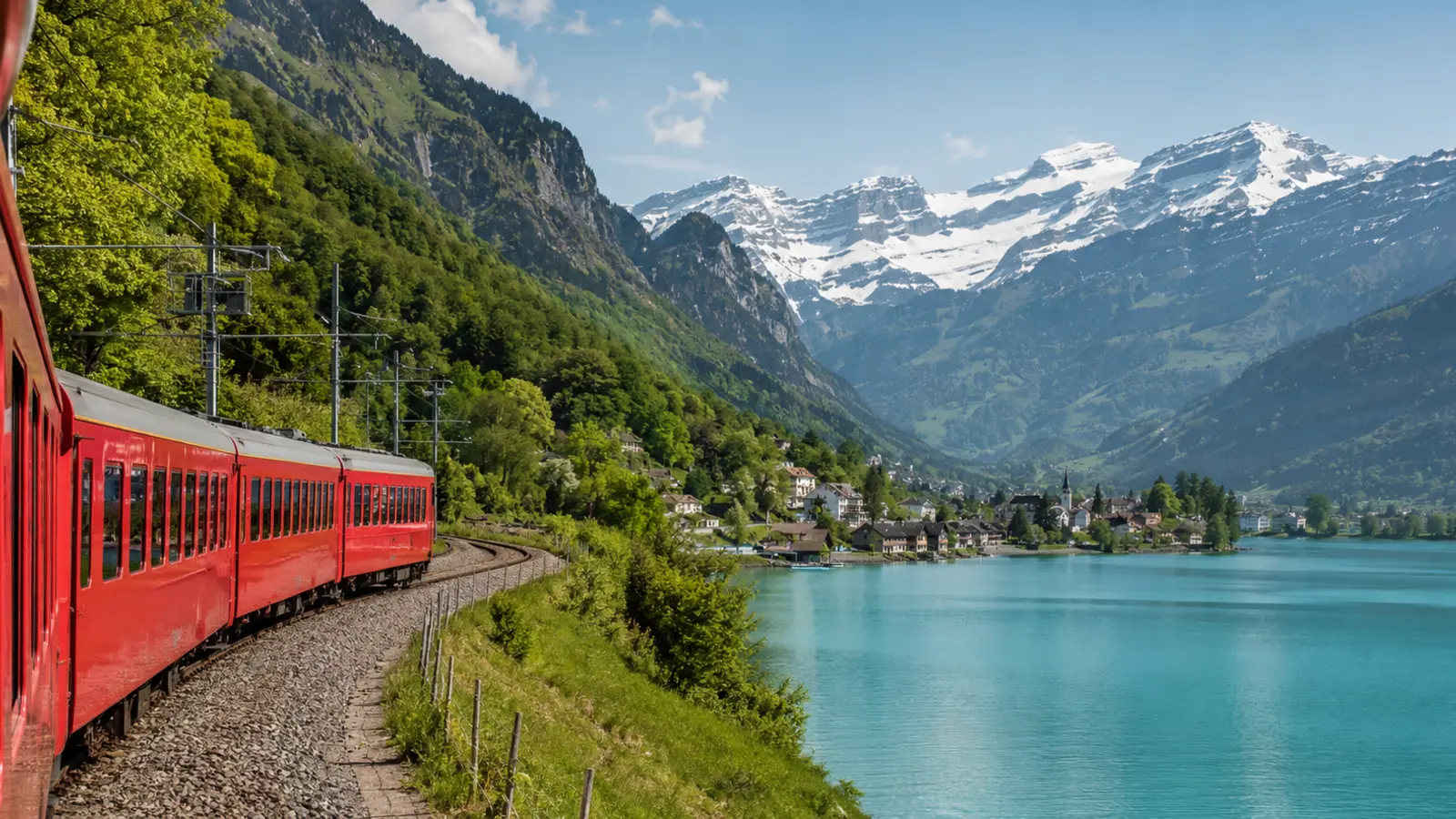
7-day Switzerland train itinerary at a glance
| Day | Base | Main plan | Overnight |
|---|---|---|---|
| 1 | Lucerne | Zurich Airport to Lucerne; lakefront and Old Town | Lucerne |
| 2 | Lucerne | Lake cruise, city day or weather-dependent mountain trip | Lucerne |
| 3 | Interlaken | Luzern–Interlaken Express; easy afternoon | Interlaken |
| 4 | Interlaken | Lauterbrunnen and Wengen, or Jungfraujoch | Interlaken |
| 5 | Zermatt | Interlaken to Zermatt via Spiez and Visp | Zermatt |
| 6 | Zermatt | Gornergrat or a weather-safe valley day | Zermatt |
| 7 | Zurich | Zermatt to Zurich or Zurich Airport | Departure or Zurich |
EuropeRailTrip practical recommendation
Keep the trip to three bases. Switzerland Tourism publishes faster seven-day touring ideas, but a first trip is better when it leaves room for weather, mountain views and an afternoon without a suitcase. Lucerne, Interlaken and Zermatt give three different landscapes while keeping the rail line logical.
May to October is the easiest period for this exact plan. Winter still works, but some lifts and walks close. During spring and autumn maintenance periods, verify mountain railways before treating them as the reason for visiting.
Day 1: Zurich Airport to Lucerne
Travel straight from Zürich Flughafen to Luzern after landing. The journey is roughly one hour on the simplest connections, so there is no need to spend the first night in Zurich unless your flight arrives late. Leave the afternoon for Chapel Bridge, the lakefront and an early dinner.
Do not pre-book a tight train after a flight. Regular Swiss domestic tickets and pass products give more flexibility than building the first day around a non-refundable connection.
Day 2: Lucerne and the lake
Use the weather to choose the day. A clear forecast supports a mountain excursion; cloud or rain favours Lucerne’s Old Town, museums and a lake boat. Avoid adding both a major mountain trip and a long lake cruise merely to maximise a pass.
Day 3: Luzern–Interlaken Express
The Luzern–Interlaken Express runs hourly and takes about 1 hour 50 minutes. A normal ticket is sufficient and the route is fully included in the Swiss Travel Pass. The train crosses the Brünig Pass and arrives at Interlaken Ost, the useful station for onward travel into the Jungfrau region.
Schedule and ticket rules checked on the official Zentralbahn Luzern–Interlaken Express page.
Day 4: Lauterbrunnen and Wengen—or Jungfraujoch
The lower-cost choice is Lauterbrunnen plus Wengen. The mountain railway from Lauterbrunnen to Wengen takes about 12 minutes, and the valley still delivers classic Alpine scenery without committing the whole day to one expensive summit.
Choose Jungfraujoch only with a promising forecast and a budget that includes the mountain ticket. From May 1 to October 31, 2026, Jungfrau Railways requires a seat reservation for the Jungfraujoch journey; the current reservation fee is CHF 10. A Swiss Travel Pass does not make the full excursion free.
Check the official Jungfrau arrival guide and 2026 reservation rule before booking.
Day 5: Interlaken to Zermatt
Allow about 2 hours 30 minutes, usually changing through Spiez and Visp. The connections are designed to work, but check the SBB timetable for your date rather than copying a fixed departure from a blog. Zermatt is car-free; you arrive in the centre and walk, use an electric taxi or take a local bus to the hotel.
Day 6: Gornergrat and Zermatt
The Gornergrat Railway reaches the summit from Zermatt in about 33 minutes and operates year-round with a season-dependent timetable. Buy only after checking visibility when your fare allows it; the mountain panorama is the point of the trip.
Operating details and live prices are published by the official Gornergrat Railway.
Day 7: Zermatt to Zurich
Allow roughly 3½–4 hours to Zurich Airport depending on the connection and add a generous flight buffer. Do not pair the long trip from Zermatt with an early international flight. For a morning departure, travel to Zurich Airport on day six and remove one Zermatt night.
Which rail pass works for seven days?
There is no 7-day Swiss Travel Pass. The consecutive product comes in 3, 4, 6, 8 and 15 days. For this itinerary, compare three options rather than automatically buying the 8-day pass.
| Option | 2026 starting point | Best for | Main catch |
|---|---|---|---|
| 8-day Swiss Travel Pass | CHF 439, adult 2nd class | Convenience, boats, city transport and frequent covered travel | Many mountain railways are discounted, not fully included |
| Swiss Half Fare Card | CHF 150 for one month | Travelers buying several mountain trips and discounted tickets | You still buy a ticket for each journey |
| Saver Day Pass | From CHF 52 without Half Fare; CHF 29 with it | Long travel days booked early | Lowest prices are limited and rise with demand |
The right answer depends on live fares and your mountain plans. Use our Swiss Travel Pass break-even guide before paying CHF 439 for convenience.
Prices checked on SBB’s official Swiss Travel Pass, Swiss Half Fare Card and Saver Day Pass pages.
Do you need reservations?
Most regular Swiss trains do not require a seat reservation. Reservations are possible on InterCity trains and on many tourist services, while a small number of journeys make them compulsory. Check the reservation symbol in the timetable rather than reserving every ordinary train.
- Luzern–Interlaken Express: a normal ticket is sufficient.
- InterCity and regional trains: usually board with a valid ticket or pass.
- Jungfraujoch: reservation mandatory May–October 2026.
- Premium panoramic trains: rules vary by service and season.
See SBB’s official seat-reservation guidance.
What to book first
- Book accommodation in Lucerne, Interlaken and Zermatt, preferably with flexible cancellation.
- Compare the pass with live point-to-point fares for your actual dates.
- Reserve only the services that require it.
- Wait for a useful forecast before locking in expensive mountain excursions when possible.
- Keep day seven flexible if it includes a flight.
For the wider planning sequence, use our Europe Route Planner, read the Swiss scenic train comparison and choose luggage you can move easily with the Europe train luggage guide.
Seasonal adjustments
| Season | Best adjustment |
|---|---|
| May–October | Use the itinerary as written; reserve Jungfraujoch if chosen and expect peak demand in summer. |
| November–March | Keep the main rail route, replacing closed hikes with winter walks, boats or town activities. |
| April and late autumn | Check maintenance closures before booking hotels around one mountain railway. |
Frequently asked questions
What is the best 7-day Switzerland train itinerary?
Use Lucerne, Interlaken and Zermatt as three two-night bases, travelling from Zurich Airport on day one and back toward Zurich on day seven.
Is 7 days enough for Switzerland by train?
Yes. It is enough for three regions, but not every famous scenic train. Limiting hotel changes produces a better trip than crossing the country each day.
Which rail pass is best for 7 days in Switzerland?
There is no 7-day Swiss Travel Pass. Compare the CHF 439 eight-day pass with the CHF 150 Half Fare Card plus tickets and any available Saver Day Passes.
Do I need seat reservations on Swiss trains?
Usually not on regular trains. Check services marked reservation possible or compulsory; Jungfraujoch requires a CHF 10 reservation from May through October 2026.
Can I do this Switzerland itinerary in winter?
Yes, but some mountain transport and walking routes are seasonal. Check operators and keep a town or lake alternative for poor weather.