How Far Is Milan From Rome? Train Time & Tickets
Italy’s two biggest city breaks are far apart on the map but surprisingly close by high-speed rail. Here is the distance that matters, the trains to compare and the station details that prevent booking mistakes.
Milan is 567 km (about 352 miles) from Rome on Italo’s rail route. The fastest direct high-speed trains take about 2 hours 50 minutes, and many useful Frecciarossa and Italo services take around three hours. For most visitors, book from Roma Termini to Milano Centrale.
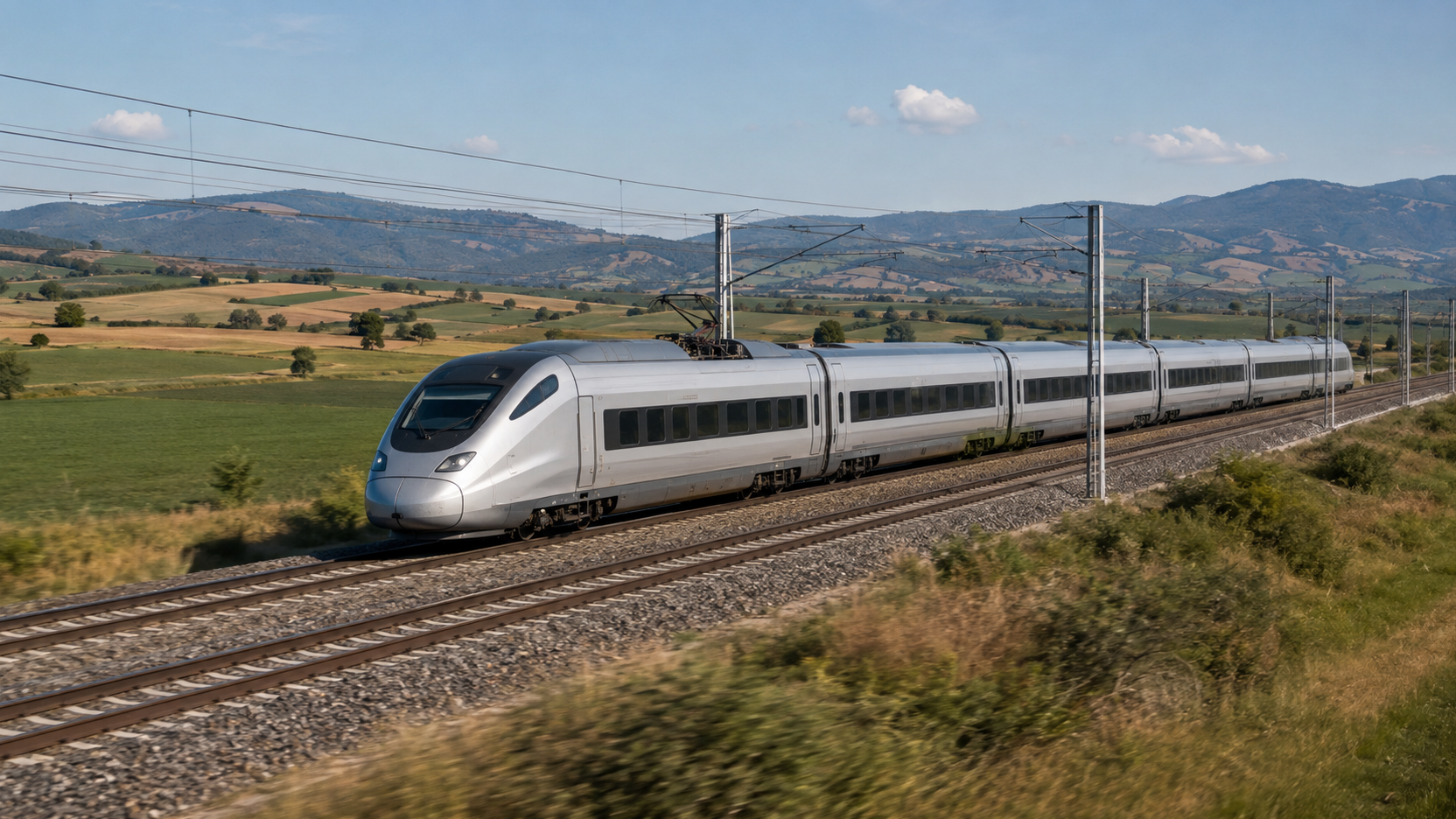
Rome to Milan train facts
| Rail distance | 567 km · about 352 miles |
|---|---|
| Fastest advertised time | Approximately 2h50 |
| Main operators | Trenitalia Frecciarossa and Italo |
| Main stations | Roma Termini → Milano Centrale |
| Changes | None on a direct high-speed service |
| Seat reservation | Included with the high-speed ticket |
Distance, journey time and advertised starting fare checked on Italo’s official Rome–Milan route page. Trenitalia currently advertises selected non-stop journeys in 2h50 on its official destinations page. Live results vary by date.
How long is the train from Rome to Milan?
The fastest advertised direct journey is about 2 hours 50 minutes. Italo lists its Rome–Milan trip at 2 hours 52 minutes, while many schedules are rounded to roughly three hours. A train with more intermediate stops can take longer, so compare the duration beside each departure instead of assuming every high-speed service is identical.
The train’s final destination may be beyond Milan, and it may call at Florence and Bologna on the way. What matters is that your result shows Rome and Milan on one service with no change. There is rarely a good reason to accept a connection when direct departures fit the same travel day.
Frecciarossa or Italo: which is better?
Both operators use modern high-speed trains with assigned seats. Neither is automatically the best on every date. Search both official websites for the same route and compare the final price, departure station, arrival station, duration and ticket conditions.
| Compare | Frecciarossa | Italo |
|---|---|---|
| Operator | Trenitalia | Nuovo Trasporto Viaggiatori |
| Main Rome station | Roma Termini on many services | Roma Termini on many services |
| Main Milan station | Milano Centrale on many services | Milano Centrale on many services |
| Best reason to choose | Better time, station or fare conditions | Better time, station or fare conditions |
Do not compare only the cheapest headline fares. A restrictive ticket can cost more later if your flight, meeting or hotel plan changes. Open the fare rules before payment and check what happens if you need a different train.
Which stations should you book?
Roma Termini
Termini is Rome’s main rail hub and the most convenient departure point for many visitors. It connects with Metro lines A and B, local buses, taxis and the Leonardo Express to Fiumicino Airport. The station is large, so leave time to read the board and reach the platform.
Roma Tiburtina
Some high-speed trains also stop at Roma Tiburtina. It can be useful for accommodation in eastern Rome, but it is not interchangeable with Termini. Search the station that fits your hotel and verify the full name on the ticket.
Milano Centrale
Milano Centrale is the main arrival station for most first-time visitors. It has metro, tram, bus and regional connections. If you are continuing to Lake Como, Venice or Switzerland, check whether the onward train leaves Centrale and allow a realistic transfer.
Milano Rogoredo
Some services call at Rogoredo in southern Milan. This may be convenient for a specific address or metro connection, but it is not the main central station. A lower fare is not a saving if it creates a difficult transfer at the other end.
How much do Rome to Milan tickets cost?
Italo currently advertises tickets from €29.90, subject to availability. This is a promotional starting price, not a guaranteed normal fare. The amount you see depends on demand, date, departure, comfort level and the flexibility attached to the ticket.
- Search both Frecciarossa and Italo for the same day.
- Compare departures 30–90 minutes either side of your target time.
- Check the exact Rome and Milan stations.
- Read exchange and refund rules before choosing the lowest fare.
- Book earlier for weekends, holidays and major events.
Direct booking usually makes changes and disruption support simpler. If you use a reseller, include its service fees and after-sales process in the comparison rather than judging only the first price shown.
Do you need to validate the ticket?
A Frecciarossa or Italo high-speed ticket is tied to a specific train, coach and assigned seat. Keep the mobile ticket or booking code available and board the service printed on it. You do not stamp this reserved high-speed ticket in a platform machine.
Regional-ticket rules are different. If you deliberately choose a slower itinerary that includes regional trains, follow the validation or activation instructions for those separate tickets.
When should you arrive?
There is no airport-style check-in for this domestic high-speed journey. For a first visit, reaching the station about 20–30 minutes early gives you time to find the correct board, platform and coach without turning a simple trip into a sprint.
Check the train number and departure time, not only the word “Milan.” The service may continue beyond Milan or display another city as its final destination.
Luggage on the Rome–Milan train
You carry your own luggage onto the train and store it above the seat or in the larger racks. Italo says luggage travels without an additional charge; available storage still depends on the coach and how busy the train is.
Use a suitcase you can lift and move yourself. Keep passports, electronics, medication and valuables with you rather than leaving them in an unattended bag at the coach end. Our Europe train luggage guide explains how to choose a manageable bag.
Luggage guidance checked on Italo’s official onboard information.
Is train better than flying?
For most city-centre journeys, train is the practical default. A direct train avoids airport security, boarding gates and long transfers, then arrives in central Milan. A flight can still make sense when your true origin or destination is near an airport, or when it connects directly with a longer itinerary.
Compare door-to-door time: hotel to station, waiting, journey, then station to hotel. The scheduled flight time alone is not a fair comparison with a train of about three hours.
Is the Rome to Milan train scenic?
This is primarily a fast transport route rather than a panoramic train. You will see stretches of Lazio and Tuscany, urban approaches and the Apennine corridor, but high-speed alignments also use tunnels and cuttings. Choose the train for speed and convenience; treat any views as a bonus.
Frequently asked questions
How far is Milan from Rome?
The rail route is 567 km, or about 352 miles, according to Italo.
How long is the train ride?
The fastest advertised direct service takes around 2 hours 50 minutes. Many useful departures are close to three hours.
Is there a direct train?
Yes. Frecciarossa and Italo both operate direct high-speed trains between Rome and Milan.
Can I travel from Milan to Rome on the same route?
Yes. The same high-speed corridor operates in both directions. Search Milano Centrale to Roma Termini and compare both operators.
Which operator is cheaper?
It changes by date and departure. Compare the final fare and flexibility on both official sites.
Do I need to reserve a seat?
Your seat reservation is included when you buy a specific Frecciarossa or Italo high-speed ticket.
The practical verdict
Book a direct high-speed train, compare Frecciarossa with Italo and default to Roma Termini–Milano Centrale unless another station clearly suits your accommodation. Around three hours from centre to centre makes rail the easiest choice for most travelers.
Build the journey into a longer itinerary with our Europe Route Planner, or combine it with our Rome to Florence train guide.
Plan Rome to Milan by train
Add both cities to your itinerary and compare estimated rail time, stations and onward connections.
Open the route planner →Information checked August 22, 2026. Operators can change schedules, fares, stations and ticket conditions. Confirm the live details shown for your train before purchase and travel.