How Far Is Switzerland From Italy? Train Routes & Times
The two countries touch, but the journey a traveler actually experiences depends on the cities and Alpine corridor. Use this guide to choose the direct fast route, the western route or the scenic Bernina approach.
Italy and Switzerland share a border, so the distance between the countries can technically be zero. For a practical rail comparison, Zurich to Milan takes as little as 3 hours 17 minutes direct, while Lugano to Como takes around 30 minutes. Direct EuroCity trains also link Milan with Basel, Bern, Lausanne and Geneva on selected departures.
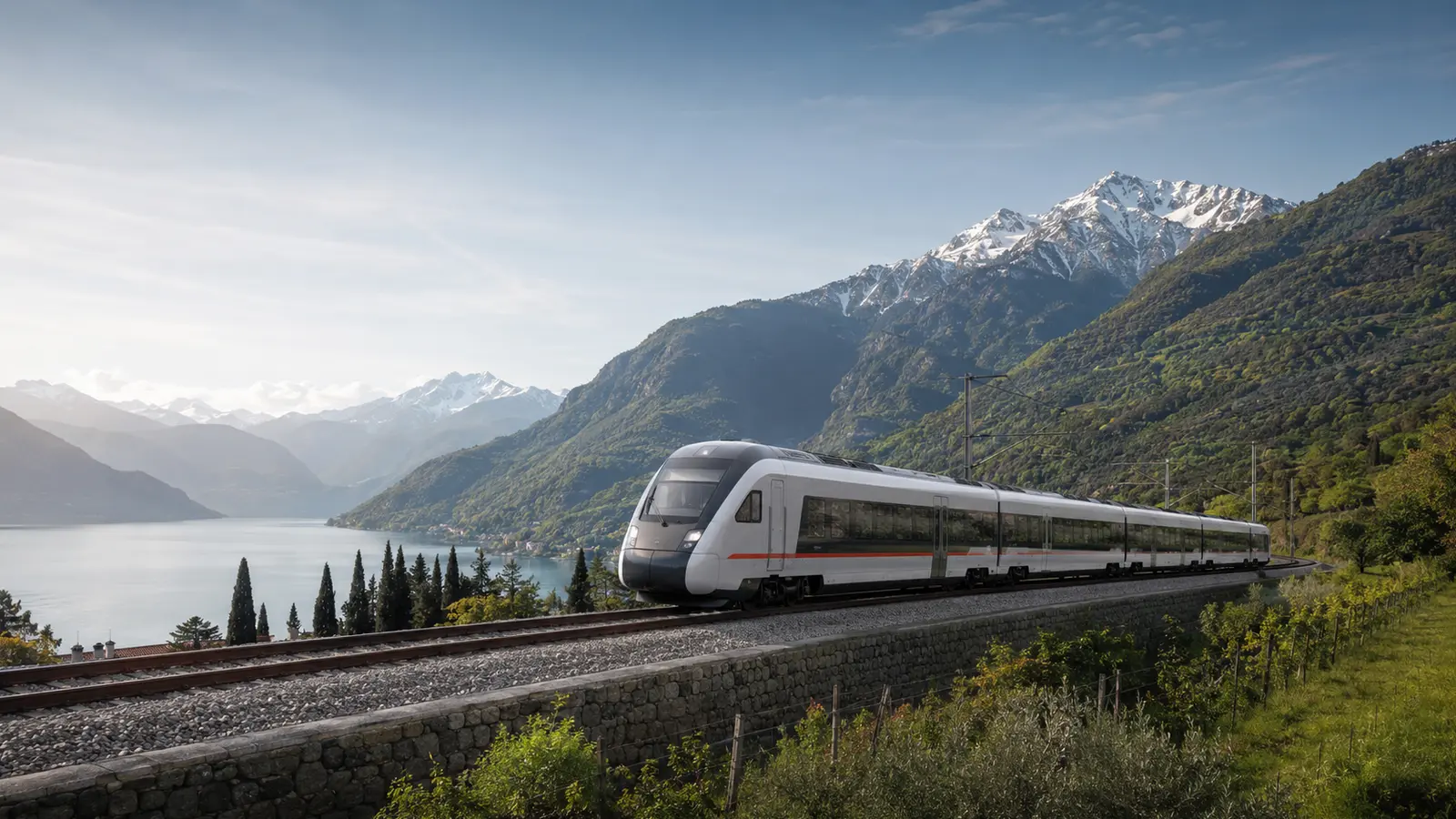
How far is Switzerland from Italy by train?
There is no honest single distance. Switzerland shares its southern border with northern Italy, and railway journeys range from a short hop between neighboring border regions to a full Alpine crossing between major cities. Asking for the two stations gives a useful answer; asking for the distance between two countries does not.
The most popular first-time route is Milan to Zurich. SBB currently lists the fastest direct train at 3 hours 17 minutes and advertises 14 direct trains per day on its official Zurich–Milan page. At the other extreme, SBB lists Lugano to Como at around 30 minutes. These examples show why your city pair matters more than the border itself.
Italy to Switzerland train times at a glance
| Route | Typical direct time | Useful corridor |
|---|---|---|
| Como–Lugano | About 30 minutes | Local cross-border / Gotthard |
| Milan–Zurich | From 3h17 | Como, Lugano and Gotthard |
| Milan–Bern | About 3h30 | Simplon and Lötschberg |
| Milan–Lausanne | About 3h30 | Simplon and Valais |
| Milan–Basel | About 4h30 | Gotthard or Lötschberg |
| Milan–Geneva | About 4h30 | Simplon, Valais and Lake Geneva |
The current city-pair times above are rounded from SBB’s official pages for direct Swiss trains to Milan, direct trains to Como and travel between Switzerland and Italy. Exact times and direct departures vary by date.
Which route should you take?
Milan, Como or Venice to Zurich and Lucerne
The Gotthard corridor is the practical choice for Zurich, Lucerne and central Switzerland. From Milan, the train travels north through Como and Chiasso, then through Ticino toward the Gotthard Base Tunnel. Choose a direct EuroCity where it fits; for Lucerne, a change may be faster than remaining on a train toward Zurich.
Milan to Bern, Lausanne or Geneva
Western Switzerland is normally reached through Domodossola, the Simplon route and the Rhône valley. Direct trains operate on selected departures to Bern, Lausanne and Geneva. When a direct train is unavailable, a sensible Swiss change can still produce a comfortable itinerary. Never assume Zurich is the best gateway for every Swiss city.
Tirano to St. Moritz
The Bernina route is the scenic choice, not the fastest national transfer. Reach Tirano in northern Italy, then take the Rhaetian Railway into the Engadin. Regional trains use the same extraordinary landscape as the branded panoramic service and can provide more flexibility. Compare the best scenic trains in Switzerland before adding this slower route to a short trip.
Direct train or one change?
A direct EuroCity is easiest with luggage and removes the risk of a missed connection. That does not make every direct departure automatically best. A one-change itinerary may leave at a better time, arrive earlier or connect more naturally with your Swiss destination. Compare total duration, not the number of train logos.
SBB says direct services run from Milan to Basel, Bern, Geneva, Lausanne and Zurich. Its Milan page rounds Zurich and Bern to about 3.5 hours and Geneva and Basel to about 4.5 hours. Check the live SBB timetable and the official Trenitalia booking site for your date because seasonal engineering work can alter the pattern.
How to book Italy to Switzerland train tickets
- Search the exact city-centre stations, such as Milano Centrale and Zürich HB.
- Compare direct results with the fastest one-change option.
- Confirm whether the fare is flexible, exchangeable or train-specific.
- Check that every cross-border leg appears on one booking when possible.
- Save the ticket and train number offline before travel.
For a simple cross-border journey, buying directly from SBB or Trenitalia makes changes and disruption questions easier. Discounted international fares are capacity controlled, so booking earlier can matter on weekends and holidays. If the trip forms part of a longer itinerary, first map the cities in our Europe Route Planner.
Do Eurail and Interrail cover the route?
Eligible passes can cover participating trains in both countries, but the pass does not remove every reservation or supplement. International EuroCity services between Italy and Switzerland can require an additional reservation. Check the exact train in the Rail Planner app and confirm any compulsory fee before you activate a travel day.
A pass may be useful when this crossing sits inside a flexible multi-country trip. A normal advance ticket may cost less when you only need Milan–Zurich. Use our Eurail Pass break-even guide and the new Eurail legitimacy and rules guide to separate product value from trust in the seller.
Passport, border and customs checks
Italy and Switzerland are both in the Schengen area, so there is normally no airport-style immigration process at the land border. You must still carry the valid passport or national identity document required for your nationality. Police can perform checks, and a rail ticket or pass is not a travel document. The Swiss Federal Office for Customs and Border Security confirms the valid-document requirement.
Switzerland is not part of the European Union customs union. Customs allowances can therefore apply even when there is no routine passport booth. If you are carrying expensive purchases, large quantities of goods or restricted items, read the official Swiss customs guidance for individual imports before departure.
Stations and connection buffers
Milano Centrale, Zürich HB, Basel SBB and Genève Cornavin are large stations but transfers are normally made on foot within the station. Allow more time when you are unfamiliar with the layout, carrying luggage or connecting onto a reservation-only train. A 20- to 30-minute buffer is more comfortable than the shortest technically permitted connection.
If your journey begins in Rome, Florence or Venice, the Italian domestic high-speed train and cross-border EuroCity may be separate fare products. Avoid building an unprotected eight-minute change in Milan. Our Rome to Milan guide, Rome to Florence guide and Rome to Venice guide help you plan the domestic leg.
Luggage and onboard comfort
You carry your own luggage onto the train and store it in the available racks. Pack a case you can lift, keep documents and valuables close, and avoid blocking doors or aisles. Cross-border EuroCity trains are conventional intercity services; there is no airline-style baggage drop before boarding.
Comfort facilities vary by train formation. SBB’s current Milan information lists first and second class, Wi-Fi and restaurant facilities on relevant services, but equipment can change. Check the train details rather than treating an amenity as guaranteed. Our Europe train luggage guide explains the practical size test.
Frequently asked questions
How far is Switzerland from Italy?
The countries share a border. For a useful city comparison, Zurich–Milan takes from about 3h17 direct, while Lugano–Como takes around 30 minutes.
Is there a direct train from Italy to Switzerland?
Yes. Selected EuroCity departures link Milan directly with Zurich, Basel, Bern, Lausanne and Geneva.
What is the fastest Italy to Switzerland train route?
It depends on the cities. Como–Lugano is a short border crossing; Milan–Zurich is the most useful fast route for many first-time itineraries.
Do you need a passport on the train?
Carry the valid passport or identity document required for your nationality. Schengen removes routine border control, not the requirement to hold valid documents.
Can you use Eurail or Interrail?
Yes on eligible trains, but check whether your EuroCity needs a separate reservation or supplement.
The practical verdict
Use Milan as the main Italian gateway, then choose the Swiss corridor by destination: Gotthard for Lugano, Lucerne and Zurich; Simplon for Bern, Lausanne and Geneva; Bernina for scenery. A direct train is simplest, but a sensible one-change itinerary can be just as good. Plan the complete route before buying its most restrictive ticket.
7-day Switzerland train itinerary
Build a realistic week through Lucerne, Interlaken and Zermatt.
See the Switzerland itinerary →Information checked September 4, 2026. Timetables, direct trains, fares, reservations and border requirements can change. Verify the live journey with SBB or Trenitalia and check official travel rules for your nationality before departure.