Winter Europe Packing List: Warm, Light & Rail-Ready
Layer for heated trains, wet city streets and cold platforms without filling the suitcase with bulky duplicates.
Pack one waterproof outer layer, two warm mid-layers, two or three base layers, warm accessories and one water-resistant walking shoe with grip. Wear the heaviest coat and boots in transit. Add thermal leggings only for genuinely cold or outdoor-heavy itineraries.
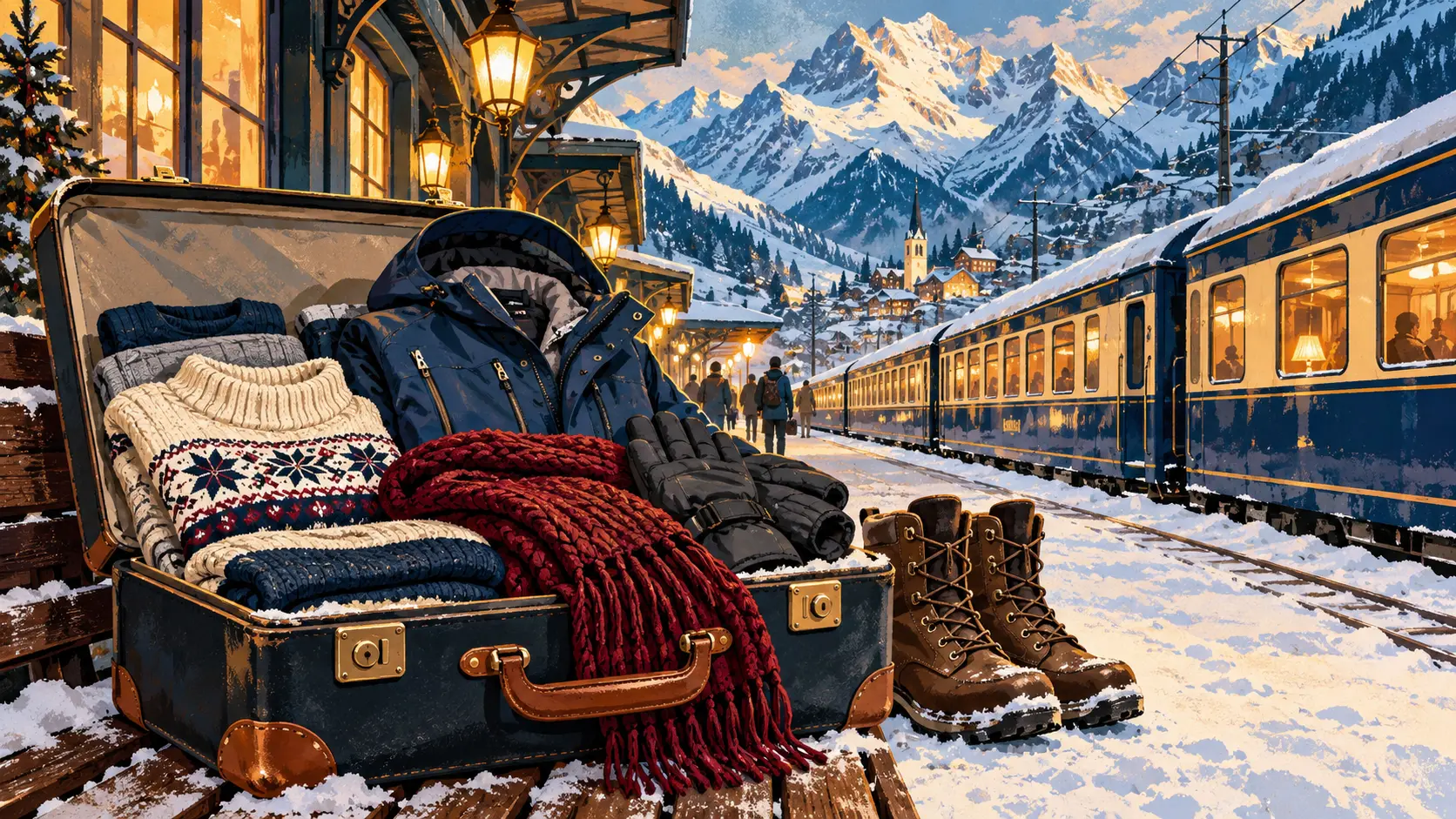
Winter in Europe is not one climate. Lisbon rain, Paris wind, Berlin cold and an Alpine platform require different combinations. The efficient solution is a layering system, not a suitcase full of thick sweaters.
Trains and indoor spaces are often heated. Every useful outfit should let you remove the coat and mid-layer without becoming uncomfortable.
Build a three-layer clothing system
The base layer manages moisture, the mid-layer provides warmth and the shell blocks wind or rain. Choose pieces that work in several combinations rather than one complete outfit for each day.
For a seven-day trip, three everyday tops, two base layers and two mid-layers are normally enough when every item matches both bottoms.
- 2–3 base-layer tops
- 2 warm mid-layers
- 2–3 everyday tops
- 2 bottoms
- Thermal leggings for cold itineraries
- Underwear and warm socks
- Sleepwear
- 1 waterproof outer coat or shell
Choose shoes for the actual surface
For cities, water resistance and grip matter more than heavy snow insulation. Wet cobbles and station stairs punish smooth soles. For mountain resorts, use footwear designed for snow and the planned activity.
Bring one main pair whenever possible. A second shoe should be lighter and serve indoor, business or evening needs.
- Water-resistant walking shoes or boots
- Grippy sole
- Warm but breathable socks
- Blister treatment
- Compact second shoe only if needed
- Small bag for wet footwear
Warm accessories with high value
A hat, gloves and scarf add more comfort per gram than another large sweater. Keep them in the day bag for open platforms and evening walks.
Touchscreen-compatible gloves are useful for tickets and navigation, but warmth and fit matter first.
- Warm hat
- Gloves
- Scarf or neck gaiter
- Compact umbrella
- Lip balm
- Hand cream
- Reusable hand warmer if useful
Winter rail essentials
Keep one layer accessible instead of burying every warm item in the main case. Platforms can be cold while the carriage is warm. A small day bag should hold water, snacks, medicine, power bank and tickets.
Snow and storms can disrupt transport. Download tickets, save the accommodation address and leave extra connection time on weather-sensitive routes.
- Offline tickets
- Power bank
- Refillable bottle
- Snacks
- Accessible mid-layer
- Waterproof luggage cover if using a backpack
- Buffer for winter connections
Adjust for region and trip style
Northern Europe and Alpine routes need warmer layers and stronger footwear. Western city breaks often need rain protection more than expedition-level clothing. Southern Europe can still feel cold indoors and after sunset.
Christmas-market trips involve long periods standing outside, while museum-heavy city breaks alternate constantly between warm interiors and cold streets. Pack for the activity pattern, not only the forecast icon.
Winter carry-on strategy
Wear the coat, boots and bulkiest mid-layer during the flight or train transfer. Pack compressible clothing loosely enough that the bag can still be closed and measured without force.
Do not use compression to justify too many items. It removes air but not weight, and tightly packed bags are difficult to manage during multi-city rail travel.
Related Europe packing and train guides
Europe train trip packing list · Christmas markets by train · Best night trains in Europe · Europe train luggage size
Frequently asked questions
How many coats do I need for winter in Europe?
One versatile weather-resistant coat is enough for most trips. Change warmth underneath with base and mid-layers.
Do I need snow boots for European cities?
Usually not. Water-resistant walking footwear with good grip is more versatile, unless the itinerary includes deep snow or mountain activities.
Can winter clothes fit in a carry-on?
Yes when you wear the coat and boots in transit, limit shoes and use a small coordinated layering system.
What should stay in my train day bag?
Keep tickets, phone, power bank, medicine, water, snacks, gloves and one removable layer accessible.
Europe Packing Planner
Adjust quantities for the trip length, weather, transport and luggage, then print or save the result as a PDF.
Generate my checklist →Information checked October 4, 2026. Airline baggage products, security rules, entry requirements and weather can change. Verify the rules attached to your booking and destination before departure.