Best Night Trains in Europe: Sleeper Routes Compared
The most famous sleeper is not automatically the best one for your itinerary. Compare the routes, accommodation and booking risks before building a holiday around a night train.
ÖBB Nightjet is the best all-round night-train network, with more than 25 European city destinations and a choice of seats, couchettes and sleepers. Choose European Sleeper for Brussels–Berlin–Prague, Caledonian Sleeper for London–Scotland, Santa Claus Express for Finnish Lapland and Intercity Notte for long journeys within Italy.
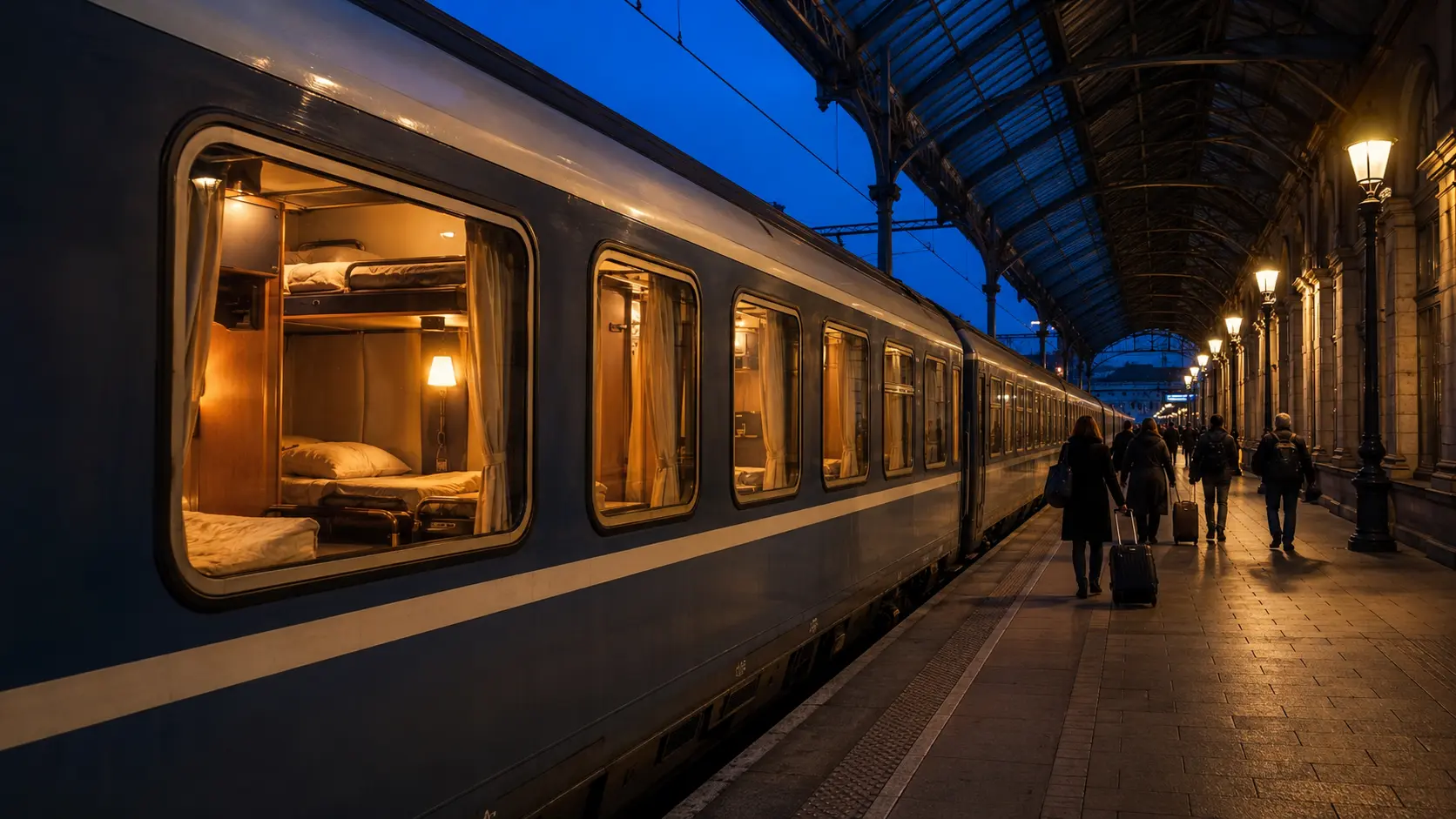
Best night trains in Europe at a glance
| Train | Core route or network | Accommodation | Best for | What to watch |
|---|---|---|---|---|
| ÖBB Nightjet | Austria with Germany, Switzerland, Italy, the Netherlands and more | Seats, couchettes, Mini Cabins on selected trains, sleepers | Best overall network | Product and facilities vary by train |
| European Sleeper | Brussels–Berlin–Prague | Seats, couchettes, sleepers | Independent cross-border route | Runs three times a week, not daily |
| Caledonian Sleeper | London–Edinburgh, Glasgow and the Highlands | Seats and private rooms | Scotland and the Highlands | Some Highland destinations split from one train |
| Night Riviera | London Paddington–Penzance | Seats and private cabins | Cornwall | A bed costs more than a seat |
| VR night trains | Helsinki/Turku–Rovaniemi, Kemijärvi or Kolari | Private cabins, including en-suite options | Lapland and families | Peak winter dates sell first |
| Intercity Notte | Northern Italy–Rome, southern Italy and Sicily | Seats, couchettes and sleepers | Long domestic journeys in Italy | Choose the right comfort level |
This comparison uses operator information checked on August 25, 2026. Routes, rolling stock and operating days can change; search the official timetable for your travel date.
EuropeRailTrip practical recommendation
Start with your itinerary, not the train name. A sleeper works best when it replaces a six-to-ten-hour daytime journey, leaves from a station you can reach comfortably and arrives late enough for a reasonable night. A glamorous cabin is poor value if you must board after midnight, wake before 06:00 or make an unprotected connection.
- Compare the sleeper with the best daytime train, not with a flight headline.
- Add the cost of the accommodation you would otherwise need.
- Check the boarding time, arrival time and final destination—not only the route name.
- Prefer a direct sleeper over a chain of separate overnight tickets.
- Book a couchette or cabin if sleep matters; a reclining seat is still a seat.
1. ÖBB Nightjet: best overall network
Nightjet is the strongest first choice because it connects more than 25 European cities and offers several comfort levels. The official destination list includes Vienna, Salzburg, Innsbruck, Zurich, Basel, Hamburg, Berlin, Cologne, Munich, Florence, Rome, Venice and Bologna, among others.
Do not assume every Nightjet has the newest rolling stock. Depending on the route, you may see conventional seats, couchettes, sleepers or the newer Mini Cabin product. Open your exact train in the booking result and inspect the accommodation before paying.
- Choose it if: your route naturally links central Europe with Germany, Switzerland, Italy, Belgium or the Netherlands.
- Best feature: the breadth of the network and multiple comfort levels.
- Watch out: accommodation and onboard facilities are route-specific.
Destinations and accommodation categories checked on the official Nightjet destinations page.
2. European Sleeper: best Brussels–Berlin–Prague option
European Sleeper links Brussels, Berlin and Prague directly three times a week throughout the year. Its published products range from Budget seats to Classic couchettes and Comfort sleeping compartments, with women-only compartments offered in the couchette category.
This is a particularly useful route for travelers beginning in Belgium or the Netherlands who want to reach Berlin or Prague without returning to Paris or changing trains during the night. Because the service is not daily, build the rest of the itinerary around an operating date only after the official booking calendar confirms it.
- Choose it if: you need Brussels or Amsterdam-area access to Berlin or Prague.
- Best feature: one direct independent sleeper across several countries.
- Watch out: seasonal route announcements can change; verify the bookable train rather than an old news article.
Current route, frequency and accommodation checked on European Sleeper’s official route page.
3. Caledonian Sleeper: best for Scotland
Caledonian Sleeper runs six nights a week between London and Scotland. The Lowlander serves Edinburgh and Glasgow, while the Highlander reaches Aberdeen, Inverness and Fort William. The train divides en route for different destinations, so the coach and destination printed on the ticket matter.
Seats are the budget option. Private rooms are the better comparison with a hotel night, with Classic, Club and Caledonian Double products available on relevant services. The route is especially valuable when it avoids both a London hotel and a daytime transfer to the Highlands.
- Choose it if: you want to wake in Edinburgh, Glasgow or the Scottish Highlands.
- Best feature: central London departure and several Scottish destinations.
- Watch out: the Fort William portion has a long journey and timetable changes can affect Highland connections.
Routes and operating pattern checked on Caledonian Sleeper’s official train and route guide. For a daytime comparison, see our London to Edinburgh guide.
4. Night Riviera: best for Cornwall
GWR’s Night Riviera connects London Paddington with Penzance in Cornwall. Travelers can use a seat or reserve a private cabin. Cabin guests receive a light breakfast, and cabins include charging, a sink and storage; toilets are elsewhere in the carriage.
The practical advantage is arrival in far-west Cornwall without losing most of a day. The route can be less convincing for a short London–Exeter journey, where a daytime train may be simpler and cheaper.
- Choose it if: your destination is Penzance or western Cornwall.
- Best feature: a long domestic transfer completed while you sleep.
- Watch out: a cabin supplement is separate from the underlying journey and popular dates can sell out.
Cabin features, boarding guidance and route checked on GWR’s official Night Riviera page.
5. Santa Claus Express and VR night trains: best for Lapland
Finland’s night trains connect Helsinki, Tampere or Turku with northern destinations including Rovaniemi, Kemijärvi and Kolari. The Helsinki–Rovaniemi service is marketed as the Santa Claus Express, but it is a practical scheduled train rather than only a themed attraction.
VR sells the whole sleeper cabin for you or your group rather than placing strangers together. Lower-floor cabins use showers and toilets in the corridor, while selected upper-floor two-person cabins have a private shower and toilet. Restaurant cars, accessible cabins and some car-carrier services make this one of Europe’s most practical family sleepers.
- Choose it if: you are traveling from southern Finland to Lapland.
- Best feature: private cabins and family-friendly facilities.
- Watch out: Christmas, ski-season and school-holiday cabins need early planning.
Routes and cabin facilities checked on VR’s official night-train guide and sleeper-car page.
6. Intercity Notte: best for long trips in Italy
Trenitalia publishes 24 daily Intercity Notte connections spanning northern and southern Italy, including services linking Milan or Turin with southern destinations and trains between Rome, Sicily and other regions. It is less of a single branded holiday route and more of a useful national overnight network.
Choose carefully between a seat, couchette and sleeping-car product. A proper berth can turn a long north–south transfer into useful sleep, while the cheapest seated option may leave you arriving tired. Sicily services are distinctive because train carriages cross the Strait of Messina by ferry, but exact working patterns should be confirmed for the date.
- Choose it if: you need a long domestic route to southern Italy or Sicily.
- Best feature: broad north–south coverage.
- Watch out: comfort varies materially between a seat, couchette and sleeper.
Network and onboard options checked on Trenitalia’s official Intercity Notte page.
Seat, couchette or sleeper cabin?
| Option | What you get | Best for | Main drawback |
|---|---|---|---|
| Seat | A reserved seat, sometimes in a compartment | Lowest budget and short overnight journeys | Poor-quality sleep for many travelers |
| Couchette | A simple bunk in a shared compartment | Value and small groups | Less privacy; washrooms usually shared |
| Sleeper | A made-up bed in a smaller compartment | Couples, solo travelers and better sleep | Higher price and limited inventory |
| En-suite sleeper | Private bed plus toilet and sometimes shower | Hotel-like privacy | Highest fare; not available on every route |
Labels are not perfectly standardized across operators. Read the occupancy, berth type and whether the compartment is private before payment. “Cabin” can describe different products.
When does a sleeper save a hotel night?
A night train saves a hotel only when the timing lets you use the evening before departure and the morning after arrival. Add the cost of a private room or couchette to the rail fare, then compare it with a daytime ticket plus one night of accommodation.
The calculation is strongest for routes such as London–Scotland, London–Cornwall, southern Finland–Lapland and long north–south journeys in Italy. It is weaker when the train departs extremely late, arrives before hotels or public transport are practical, or requires a separate positioning night.
How to book a European sleeper safely
- Search the official operator using the exact travel date and city pair.
- Confirm that the result is direct or inspect every connection.
- Choose the accommodation before comparing the final price.
- Check whether the compartment is private or shared and whether it is gender-specific.
- Read cancellation rules and save the ticket offline.
- Recheck the schedule shortly before travel because engineering work often affects overnight trains.
Booking windows differ and operators can load timetables gradually. Our guide to how far ahead to book European train tickets explains why a missing far-future train is not always cancelled.
Night trains with Eurail and Interrail
A Eurail or Interrail pass can cover the base journey on participating operators, but most night trains still need a paid reservation or accommodation supplement. The pass does not guarantee a berth. Popular sleeper inventory can sell out even when the rail pass itself remains valid.
Compare the supplement plus the travel day you use with a normal sleeper ticket. Our Eurail Pass value guide shows how to test the complete itinerary rather than assuming every pass-covered journey is free.
Interrail states that most high-speed and night trains require a reservation at additional cost. Check the exact train in the pass reservation system and with the operator.
Practical sleeper-train packing
- Keep your ticket, passport, phone and valuables in a small bag beside you.
- Pack earplugs, an eye mask, water and one layer you can reach without opening the main suitcase.
- Wear simple clothes for boarding and bring footwear for shared washrooms.
- Set a quiet alarm before arrival and note whether breakfast is included.
- Use luggage you can lift into a cabin or rack; see our Europe train luggage guide.
Frequently asked questions
What is the best night train in Europe?
ÖBB Nightjet is the best all-round choice because its network reaches more than 25 European cities and offers seats, couchettes and sleepers. The best train for a specific trip is the one that replaces a useful daytime journey without creating an awkward connection.
Are there sleeper trains across Europe?
Yes. Current sleeper networks include ÖBB Nightjet and EuroNight services, European Sleeper, Caledonian Sleeper, GWR Night Riviera, VR night trains in Finland and Trenitalia Intercity Notte. Coverage is useful but not continuous, so verify the exact route and date.
Are sleeper train holidays in Europe worth it?
They can be worth it when the train replaces both a long daytime transfer and a hotel night. Compare the private cabin price with a day train plus accommodation, and avoid building a trip that depends on several separate overnight connections.
How far in advance should I book a European night train?
Book once the operator opens sales if your dates are fixed, especially for private cabins, weekends and holidays. Sales windows vary, and a missing far-future departure can mean the timetable has not opened rather than the train being cancelled.
Are night trains included in Eurail or Interrail?
A valid pass can cover the base journey on participating trains, but most night trains require a paid reservation or accommodation supplement. Check the operator and pass reservation rules for the exact service before activating a travel day.
The practical verdict
Nightjet wins for network breadth, European Sleeper for Brussels–Berlin–Prague, Caledonian Sleeper for Scotland, Night Riviera for Cornwall, VR for Lapland and Intercity Notte for Italy. Choose the route that removes an inconvenient travel day, then pay for the lowest accommodation level that will still let you sleep.
Plan a realistic Europe train trip
Combine sleeper and daytime journeys without creating risky connections.
Open the Europe route planner →Information last checked August 25, 2026. Night-train routes, operating days, rolling stock, booking windows, fares and reservation rules can change. Verify the exact service with the operator before purchase.